








Tempering Valve · Sydney
Tempering Valve Replacement and adjustment across Sydney
A failing tempering valve can put scalding-hot or stone-cold water at the tap in seconds. Apex Plumbing Services replaces, adjusts and tests tempering valves to NSW compliance with a licensed plumber on site, fixed quotes, and a 24/7 line for genuine emergencies.
26+
Years On The Tools
122+
5-Star Reviews
24/7
Sydney Support
Why It Matters
Stored hot water sits at 60 °C to stop Legionella. A tempering valve brings it back down to a safe 50 °C at the tap.
When the valve fails, that safety margin disappears. A child can suffer a third-degree burn from 60 °C water in around one second.
50 °C
Required outlet temp for general use under NSW plumbing standards
5–8 yr
Typical service life before replacement is recommended
What it does
The quiet safety device on your hot water system
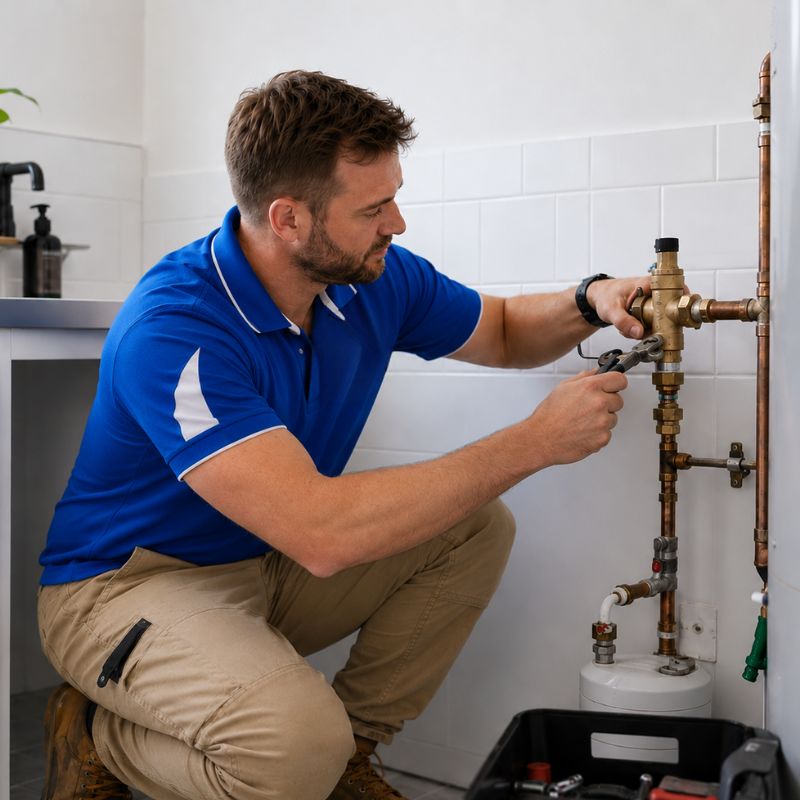
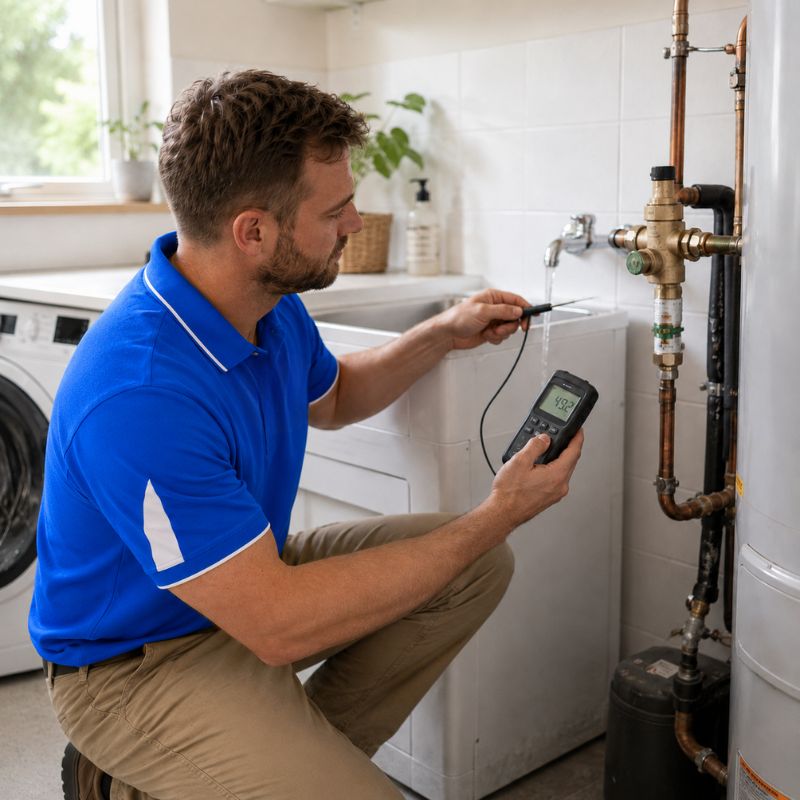
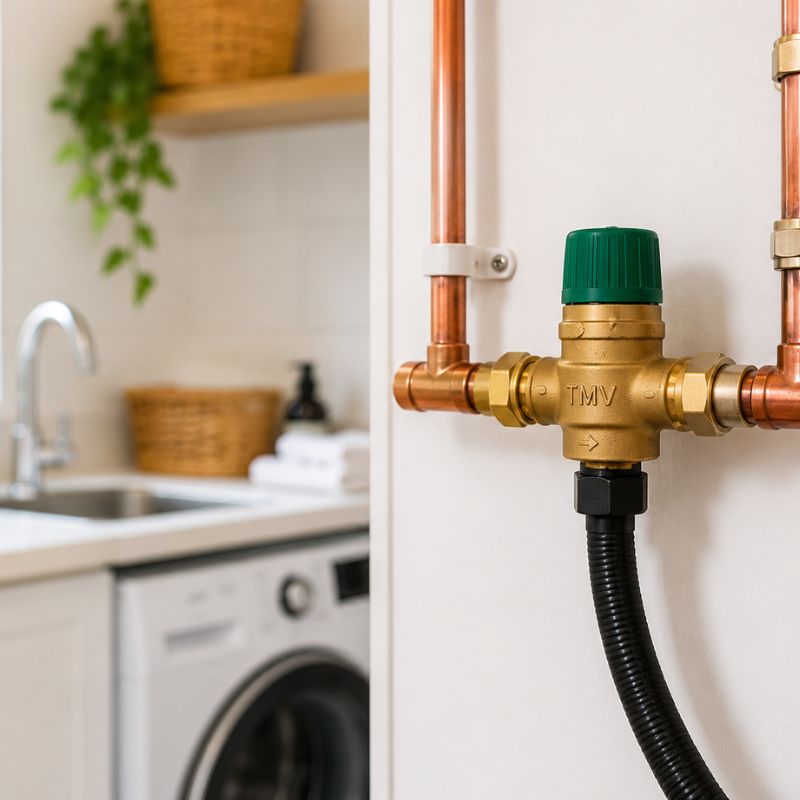
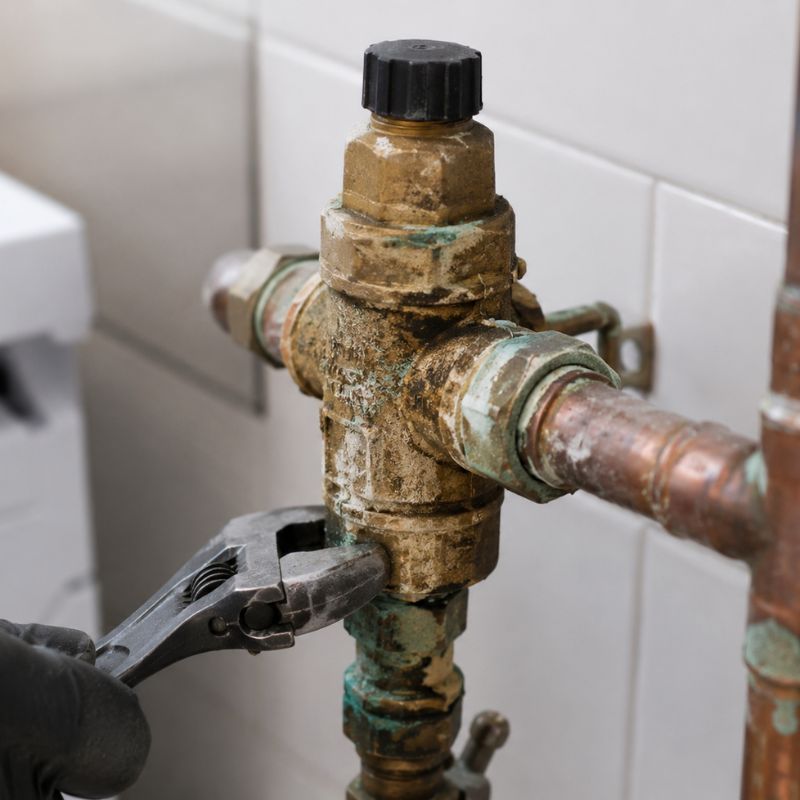
A tempering valve sometimes called a hot water mixing valve is a three-way valve fitted to the outlet of your hot water system. It blends stored hot water with cold water before that water reaches the bathroom, kitchen or laundry, holding the delivered temperature at a steady 50 °C. The valve uses a temperature-sensitive element inside that expands and contracts as the water flows, opening and closing the hot and cold inlets to keep the mix stable even when supply pressure shifts.
Tempering valves are mandatory on storage hot water systems across Australia. They’ve been required under the Plumbing Code of Australia for over a decade, and on a Sydney property they’re typically fitted directly to the outlet of the storage tank gas, electric, solar or heat pump. If your system is more than five to eight years old and the valve has never been touched, it’s worth booking a check. Apex provides licensed hot water systems support and can inspect the valve as part of a broader service visit.
“Storage tanks have to sit at 60 °C or higher to kill Legionella. That same water will scald an adult in under five seconds. The tempering valve is the only thing standing between the two.”
Minimum tank storage temperature to prevent Legionella growth
Maximum delivered temperature at sanitary fixtures (general)
Signs you need replacement
Six warning signs of a faulty tempering valve
A failing valve rarely announces itself. Most people notice the symptoms long before they trace the cause back to a small brass fitting on the hot water unit. If any of these are happening at your Sydney property, book a check.
01
Hot water that swings between scalding and cold
Sudden temperature spikes or drops mid-shower are the most common symptom of a worn tempering valve. The internal piston can no longer hold a steady mix, so what hits the tap depends on what's currently moving through the inlets.
02
Lukewarm water you can't make hotter
If your hot taps now only reach a tepid temperature even with the system running normally, the valve may be stuck open on the cold side. This is also the failure mode you want, in a sense better than scalding but it still needs replacement.
03
Visible leak, drip or corrosion at the valve
The valve sits in a pressurised line, so dripping, calcium streaking or green corrosion on the body all point to internal seal failure. Left alone, a slow drip becomes a steady leak and the valve will need to come out.
04
A sudden shut-off of hot water flow
Most modern tempering valves have a thermal shut-off built in. If the cold inlet fails or the valve detects an unsafe mix, it closes the outlet entirely. Hot water cutting out is sometimes the valve protecting the household, not the heater dying.
05
The valve is 5 to 8 years old (or older)
A standard residential tempering valve has a service life of five to eight years. After that, the thermostatic element gradually loses sensitivity. Replacing tempering valve on schedule is cheaper than replacing it after a failure.
06
Water pressure fluctuating at hot fixtures
Inconsistent water pressure on the hot side especially compared with cold can mean sediment has built up inside the valve and is restricting flow. This is more common in older Sydney homes with original galvanised pipework.
Why 50 °C matters
The scald window closes faster than most people realise
Tempering valves exist because a few degrees of difference change the injury profile dramatically. The figures below are widely cited in Australian plumbing safety material and explain why NSW standards cap delivery temperature at 50 °C.
Time to a third-degree burn, by water temperature.
The hotter the water, the smaller the window. Children’s skin is thinner and burns faster than adult skin at the same temperature.
~1 second (adult)
~0.5 seconds (child)
~5 seconds (adult)
~1 second (child)
~30 seconds (adult)
~7 seconds (child)
~5 minutes
(adult and child)
What Apex does
Tempering valve replacement, adjustment, installation and testing
Every job starts the same way a licensed plumber on site, an inspection of the valve and the broader hot water system, and a clear scope before any work happens. No surprises on the invoice, no scope creep on the day.
Most common
Tempering Valve Replacement
When the valve is beyond adjustment leaking, corroded, past its service life or showing thermal drift a full replacement is the right call. Apex carries common valve sizes and fittings, so most water heater valve replacement jobs are completed in a single visit.
- Inspection of existing valve, fittings and supply pipework
- Like-for-like replacement matched to the system type
- Outlet temperature set, tested and confirmed at 50 °C
- Pressure and flow checked at multiple fixtures before sign-off
Quick fix
Tempering Valve Adjustment
Not every valve needs replacing. When the valve is still in good condition but the delivered temperature has drifted, a hot water tempering valve adjustment can bring it back into spec. This is the right path when the valve is under five years old and shows no signs of physical wear.
- Outlet temperature measured at multiple fixtures
- Adjustment screw tuned to NSW 50 °C delivery target
- Cold inlet pressure verified for stable mixing
- Re-test after a settling period to confirm the setting holds
New install
Tempering Valve Installation
When a hot water system is being replaced or a property is being upgraded to meet current plumbing requirements, a new tempering valve installation is mandatory. Apex installs valves matched to the system storage gas, electric, solar or heat pump and supplied with the correct cap colour for each.
- Valve sized and selected to match the system and flow rate
- Isolation valves fitted to both hot and cold inlets
- Compliance setting confirmed with a calibrated thermometer
- Documentation provided for warranty and resale records
Routine
Tempering Valve Testing
Tempering valve testing on residential systems isn’t legally mandated in NSW the way it is on TMVs in commercial settings, but a regular outlet temperature check is the simplest way to catch a drifting valve early. Apex can include this as part of a broader hot water service.
- Outlet temperature measurement at bathrooms and laundry
- Inspection of valve body for corrosion, leak or seal failure
- Brief flow and pressure check on hot supply line
- Written record of measured outlet temperatures
For wider plumbing issues that surface during a tempering valve job leaking pipework, gas connections, hot water faults Apex can step across to the relevant trade on the same visit. Gas-side problems are handled by a licensed gas plumber; urgent water leaks fall under the emergency plumber service.
Identifying your valve
The tempering valve cap colour tells you what system it's matched to
If you’re looking at your hot water system and trying to work out what valve is fitted, the cap colour on top of the valve is the quickest tell. Apex always matches the replacement to the system type using the wrong cap on the wrong system is the most common DIY mistake.
Cap colour
Blue
Orange
Green
Red / Black
System type
Standard electric storage hot water systems
Solar hot water and heat pump systems
Gas storage and some continuous flow systems
Commercial and large-capacity systems
Typical delivery setting
50 °C
50 °C (handles higher inlet temps)
50 °C (some pre-set at the factory)
50 °C or 45 °C, depending on building
Don’t adjust or swap a tempering valve yourself. Even between residential models, the springs and thermal elements are tuned for different inlet conditions, and a mismatched valve will either fail early or fail to hold the safe outlet temperature.
NSW Compliance
What the standards actually require
Tempering valve work in NSW sits inside the National Plumbing and Drainage Standard AS/NZS 3500.4 and is regulated by NSW Fair Trading. The practical rules are simpler than the regulation reads.
The 50 °C and 45 °C rules.
Across NSW, all new heated water installations must deliver heated water no hotter than 50 °C at fixtures used for personal hygiene in standard residential and commercial settings.
The 45 °C limit applies to fixtures in healthcare and aged care buildings, early childhood centres, primary and secondary schools, nursing homes and similar facilities where the users are children, elderly residents, or people with disabilities. These sites typically require a thermostatic mixing valve (TMV) rather than a standard tempering valve.
What this means in practice.
For most Sydney homes, a standard tempering valve set to 50 °C is what the standard calls for. If you’re running an in-home aged care setup, a family day-care, or a multi-unit residential build with shared bathrooms, a TMV calibrated to 45 °C may be required instead.
Either way, the valve must be installed, replaced and adjusted by a licensed plumber and that licensing matters for insurance, warranty and resale. Apex operates under NSW Plumbing Licence 306733C.
Tempering valve vs thermostatic mixing valve (TMV)
The two devices solve the same problem but with different precision. The right one for your property depends on who’s using the hot water, not personal preference.
Standard residential
Tempering Valve
Accuracy
±3 °C around setpoint
Response to pressure change
Moderate – adjusts as flow shifts
Typical setting
50 °C delivered
Where it fits
Most Sydney homes, standard residential storage systems
Service life
5–8 years
High-precision / care settings
Thermostatic Mixing Valve
Accuracy
±1 °C around setpoint
Response to pressure change
Fast – reacts almost immediately to inlet shifts
Typical setting
45 °C delivered
Where it fits
Aged care, childcare, schools, hospitals, NDIS-equipped homes
Service life
Similar, but requires annual certified testing
How the service runs
What happens after you call Apex.
Every tempering valve job follows the same five-step process. The point is to make sure you understand the scope before any tool comes out, and to leave the system safer than it was when we arrived.

You call or request a quote.

A licensed plumber inspects the system.

You receive a fixed scope and a fixed quote.

The replacement, adjustment or installation is completed.

Outlet temperature is tested and confirmed.
Pricing transparency
What affects tempering valve replacement cost.
Apex doesn’t publish a single dollar figure because the honest answer is that price depends on what’s behind the wall and on the property. Here’s what changes the number, so you know what to expect when the quote comes through.
System type and valve compatibility
Standard residential valves are inexpensive parts; high-output solar, heat pump and large commercial valves cost more and may require specific cap colours and inlet sizes.
Condition of surrounding pipework
If the existing fittings, isolation valves or copper tail are corroded or undersized, those parts may need replacement too. The valve itself is rarely the whole job on an older system.
Access to the hot water unit
A valve mounted at a ground-level unit beside the laundry is faster than one tucked into a tight roof cavity or above a stairwell. Time on site flows directly into the labour line on the quote.
Whether other work is bundled in
If the visit also covers a hot water service, an anode check or a pressure-limiting valve replacement, the per-item cost typically comes down compared with a single-item callout.
Urgency and time of attendance
A booked visit during business hours is the most cost-effective. Genuine after-hours emergencies — water flooding, no hot water for a household — are handled the same day, with the trade-off being availability and scheduling.
Fixed quoting
One scope. One quote. No surprises on the invoice.
“We confirm the work and the price before a single fitting comes off the wall. If something changes, we pause and ask.”
Apex provides fixed quotes for agreed repair scopes after inspection. If the job opens up something unexpected and on older hot water systems it sometimes does work pauses until you’ve signed off on the change.
Why Apex
Licensed, local, and built around clear communication.
Apex has been on the tools in Sydney for over twenty-six years. The reason people call back for hot water and tempering valve work isn’t novelty it’s that the team explains what’s happening, gives a fixed price, and stands behind the work after the truck leaves.
Licence
NSW Licensed Plumber 306733C
All tempering valve work is carried out by a licensed plumber, with documentation provided for warranty and resale records. Licensing matters when something needs to be defended later.
Experience
26+ years on Sydney plumbing
Twenty-six years means we've seen the unusual valve mounts, the long-discontinued cap colours and the strange retrofit jobs that newer teams haven't encountered yet.
Trust
122+ five-star reviews
The pattern in the reviews is consistent: honest advice, clear options, no upsell. That's also what we hear from clients who switched to us after a bad experience elsewhere.
Pricing
Fixed quotes after inspection
You get a written scope and a fixed price before any work begins. If a scope change is genuinely needed mid-job, work pauses and you sign off or don't before we continue.
Guarantee
Workmanship guaranteed
Every tempering valve replacement, adjustment and installation is backed by an Apex workmanship guarantee. If the valve isn't holding spec after sign-off, the team comes back.
Availability
24/7 across Sydney
For a stuck-on, leaking or completely failed valve, the 24/7 line gets you a callback fast. Routine adjustments are booked in business hours to keep cost down for you.
FAQs
Tempering valve questions, answered.
The questions Apex gets asked most often when a tempering valve replacement or adjustment is being booked.
How do I know if my tempering valve needs replacing or just adjusting?
If the valve is under five years old, in good physical condition, and the only issue is a slow drift in delivered temperature, an adjustment usually fixes it. If the valve is older, visibly corroded, leaking, or has stopped responding to adjustment, a full replacement is the right call.
The honest answer is that this is hard to judge from a photo or description a licensed plumber needs to inspect the valve, check the outlet temperature and look at the surrounding pipework before recommending one path or the other. Apex provides a clear scope and fixed quote after the inspection so the decision is yours.
How much does tempering valve replacement cost in Sydney?
The total cost depends on the valve type, condition of the surrounding fittings, access to the hot water unit, and whether other work is being completed on the same visit. Replacing a standard residential tempering valve on accessible pipework is a relatively straightforward job; replacing a solar or heat pump valve, or one on a corroded older system, takes longer and involves more parts.
Apex provides a fixed quote after on-site inspection rather than a published price list. That way you know exactly what the job will cost before any work starts including any pipework, isolation valves or testing required to leave the system compliant.
Is a tempering valve legally required on my hot water system?
For most storage hot water systems in NSW, yes. The Plumbing Code of Australia and the National Plumbing and Drainage Standard AS/NZS 3500.4 require heated water to be delivered at no more than 50 °C at fixtures used for personal hygiene in standard residential settings and 45 °C in healthcare, aged care, childcare and school settings. A tempering valve is the standard way to meet that requirement on a storage system.
Tankless continuous-flow gas systems that are factory-set at 50 °C are the main exception. Even then, Apex inspects the system to confirm the setting before assuming a valve isn’t required.
Can I adjust the tempering valve myself?
Technically the adjustment screw is accessible. In practice, the work is best left to a licensed plumber. The adjustment depends on the inlet pressure, the cold supply temperature on the day, and a calibrated thermometer at the outlet without those you’re setting the valve by feel, and feel is a poor judge of a one or two degree shift.
There’s also a legal angle: incorrect tempering valve work can void hot water system warranties and create exposure if a scald injury occurs later. Apex performs hot water tempering valve adjustment using calibrated equipment, documents the final outlet temperature, and stands behind the setting.
How long does a tempering valve last before it needs replacing?
The typical service life is five to eight years for a standard residential tempering valve. Some valves last longer particularly in soft-water Sydney suburbs and on systems with low sediment build-up but the thermostatic element inside gradually loses sensitivity over time, even when the valve looks fine externally.
If your hot water system is more than five years old and the tempering valve has never been checked, it’s worth booking a tempering valve testing visit. That’s far cheaper than a failure-driven emergency callout.
What's the difference between a tempering valve and a TMV?
Both blend hot and cold water to deliver a safe outlet temperature. A standard tempering valve is accurate within around 3 °C of setpoint and is the right device for most Sydney homes, set to deliver 50 °C. A thermostatic mixing valve (TMV) is more precise usually within 1 °C and reacts faster to pressure and inlet temperature changes.
TMVs are required in healthcare, aged care, childcare, schools and similar facilities where users are vulnerable to scalding and where the delivered temperature has to sit at 45 °C. They also require certified annual testing in those settings. Apex installs and services both.
Will replacing the tempering valve fix my hot water issues?
Sometimes and sometimes it points to something else. If the symptoms are clearly temperature-related (fluctuating heat, lukewarm hot water, sudden cold) and the valve is past its service life, the valve is the most likely cause. But the same symptoms can also come from a failing thermostat in the tank, a sediment problem inside the unit, or a pressure issue further upstream.
That’s why every Apex tempering valve job starts with an inspection rather than an assumption. The plumber checks the broader system before recommending a fix, so you don’t pay for the wrong repair.
Do you offer tempering valve services across all of Sydney?
Yes. Apex provides tempering valve replacement, adjustment, installation and testing for properties across Sydney residential, strata and commercial. Availability on any given day depends on job urgency, valve type and access, so call or request a quote with your property details and the team will confirm timing.
Book a Sydney plumber
Get a tempering valve sorted, before scald risk becomes a problem.
A licensed Sydney plumber, a fixed quote after inspection, and a workmanship guarantee on every tempering valve replacement and adjustment. Call the 24/7 line for urgent issues, or request a free quote for booked-in work.
