













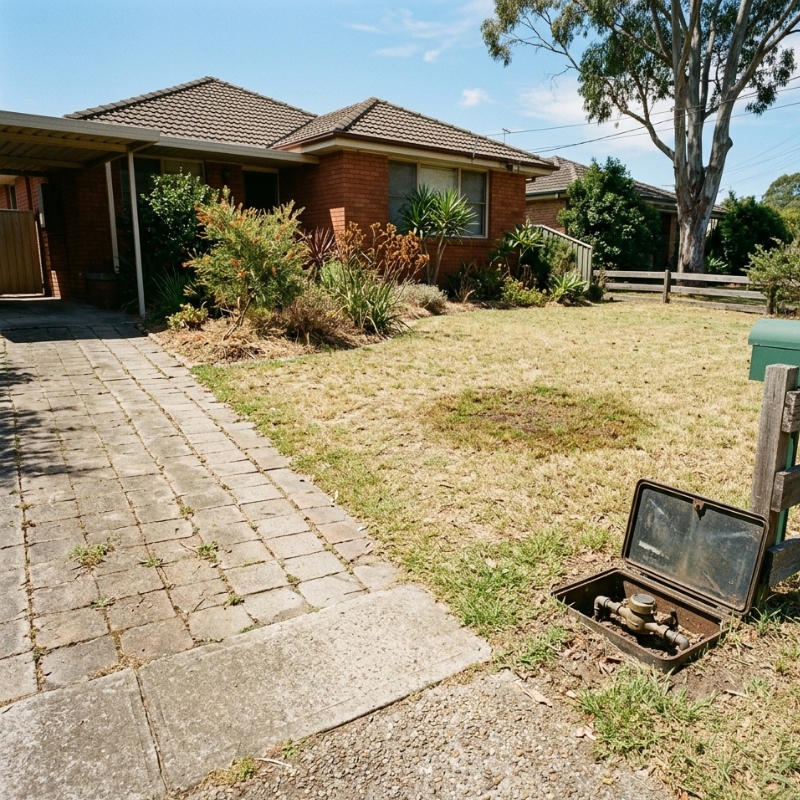
What Are the Early Warning Signs of a Hidden Underground Leak on Sydney Properties?
Underground leaks can be sneaky, and knowing how to detect underground water leak early matters. They often start as a slow seep somewhere between the water meter and the house, under a driveway, or beneath a garden bed — quietly wasting water and gradually undermining soil, paving, and even slab edges.
Sydney homes can be especially prone to “hard-to-spot” leaks because of a mix of older pipework in established suburbs, reactive clay soils in many areas, and aggressive tree roots looking for moisture. The good news is that there are usually early clues. If you know what to look for, you can act before a small issue turns into water damage, mould, or a costly repair.
What counts as an “underground” leak?
An underground leak typically means a break, crack, or joint failure in pipework buried in the ground, such as:
• The water supply line running from the meter to the home
• Garden/irrigation lines
• Pipes feeding an external laundry, granny flat, or outdoor tap
• Sections running under driveways, paths, or landscaping
It’s different from a hidden leak inside walls or ceilings, but the warning signs can overlap — especially when moisture travels.
What are the earliest warning signs to look for outside?
Is there a wet patch in the yard when it hasn’t rained?
One of the most common early signals is a patch of ground that stays damp in dry weather.
Look for:
• Soil that feels spongy or sinks slightly underfoot
• A patch that’s darker than the surrounding dirt
• Water pooling at the same spot repeatedly
• Dampness that returns soon after drying out
Sydney-specific tip: If you’ve had a dry stretch and a “mystery wet patch” appears anyway, treat it as a serious clue — especially near the meter, the house line route, or along fence lines where pipes often run.
Is one area of grass suddenly greener or growing faster?
A leaking underground line can act like a hidden irrigation system. If you notice:
• A lush green strip across the lawn
• One garden bed is thriving unusually well
• A narrow “line” of healthier grass (often following a pipe route)
…that can point to a constant moisture source below.
Are there bubbles, soft spots, or erosion in the ground?
Leaks don’t always show water on the surface. Sometimes they wash away soil underneath.
Watch for:
• Small sinkholes forming
• Crumbly soil or erosion channels
• Loose pavers or a section of path that wobbles
• Depressions appearing near the driveway edge or slab perimeter
If the ground is shifting around structures, it’s a “don’t wait” situation.
Are your pavers, driveway, or path moving or cracking?
When water undermines the base layer under paving, symptoms can show up as:
• Cracks spreading or widening
• Pavers sinking, tilting, or separating
• A driveway section feels hollow underfoot
This is one of the ways an underground leak can “worsen” even if the leak rate stays the same — because the ground support is gradually being compromised.
What are the early warning signs inside the home?
Has your water pressure dropped suddenly?
A noticeable change in pressure (especially at multiple taps) can indicate water is escaping somewhere along the line.
Check:
• Does it affect both hot and cold?
• Is it worse at peak times only (could be supply/demand), or constant (more suspicious)?
• Did it start abruptly rather than gradually?
A sudden, persistent drop is worth investigating.
Do you hear water movement when everything is off?
In a quiet home, you might hear:
• A faint hiss
• A rushing sound
• A constant “water running” noise
Try this: turn off all taps and water-using appliances, then listen near the meter area (outside) and along walls where the main line enters.
Are there damp smells, mould spots, or unexplained humidity?
Even without visible wetness, moisture can travel through soil and building materials.
Be alert to:
• Musty smells in cupboards, under stairs, or near ground-floor rooms
• Mould spots that keep returning despite cleaning
• A room feels more humid than the rest of the house
Moisture issues can have other causes (like condensation), but if they pair with other leak signs, they move up the suspect list fast.
Are floors or finishes changing for “no reason”?
Hidden moisture can show up as:
• Warped floorboards or lifting laminate edges
• Loose tiles or a hollow sound under tiles
• Bubbling paint or peeling plaster near skirting boards
If you see material changes near the floor line, don’t assume it’s just “age” — especially if it’s new or worsening.
How can you confirm a suspicion quickly with a water meter test?
This is one of the most AEO-friendly “proof steps” because it’s simple, fast, and gives a clear yes/no indicator that water is being used somewhere.
Water meter leak test (Australian homes)
- Turn off everything that uses water
• Taps off (inside and outside)
• Dishwasher/washing machine not running
• Irrigation system off
• Check toilets aren’t refilling (listen for trickle sounds) - Locate your water meter
In Sydney, it’s commonly near the front boundary. Open the lid and look at the dial/odometer-style numbers. - Record the reading
Take a photo — it’s easier than writing it down. - Wait 10–30 minutes without using any water
Longer waits can help catch slow leaks, but even 10 minutes can show movement. - Check again
If the reading has changed, water is flowing somewhere.
Sydney Water also describes practical leak checks using your meter in their guidance, which is worth reading alongside this checklist: Sydney Water’s leak detection guide.
Q&A: What if the meter moves only a tiny bit?
A small change can still matter. A slow leak running 24/7 can waste a surprising amount over weeks — and can still cause gradual ground movement or moisture problems. Treat any consistent movement (with all water off) as a meaningful sign.
How do you tell if it’s an underground leak or something else?
Because wet patches and mould can have other causes, use this quick elimination approach.
Is it irrigation, rainwater, or plumbing?
Ask:
• Did the wet area appear after the irrigation ran?
• Is there a sprinkler head or drip line nearby?
• Is the wet patch downhill from a downpipe (stormwater issue)?
• Does the patch grow after rain (drainage) or stay regardless (leak)?
If the wet patch persists through dry weather and the water meter test shows usage, that combination strongly suggests a plumbing leak.
Q&A: Can toilets cause “underground leak” symptoms?
Toilets don’t cause underground leaks, but they can cause the same “high water bill” shock. A silent toilet leak is common and can keep the meter ticking. If your meter moves, check toilets first (food colouring in the cistern is a common at-home test). If toilets are fine and the meter still moves, the leak is likely elsewhere.
Where do underground leaks commonly happen on Sydney properties?
While any buried line can fail, common hotspots include:
Near the water meter and boundary line
Connections, older fittings, and movement at the entry point can contribute.
Under driveways and paths
Heavy loads and shifting base material can stress pipes.
Around tree roots
Sydney’s established suburbs often have mature trees. Roots seek moisture and can intrude or displace pipework.
Along older pipe runs
Older properties may have ageing pipe materials or joints that don’t tolerate movement as well.
What should you do immediately to stop it from worsening?
If you have multiple warning signs or the meter test indicates continuous usage, your goal is to limit damage while you organise a proper diagnosis.
1) Reduce water use and isolate where you can
- Turn off taps and avoid unnecessary water use
- If you know how to safely use your property’s stop tap, consider turning it off when you’re away or overnight (only if it won’t create other issues for the household)
2) Take evidence early
This helps with decision-making and can assist with insurers if damage progresses.
Capture:
• Photos of wet patches, damp walls, bubbling paint, mould, and meter readings
• Dates and times (especially for meter test results)
• Notes on water pressure changes and any audible sounds
3) Avoid “guess-and-dig”
Random digging can damage other services and can make the site harder to assess. If you suspect a leak under a driveway or near services, caution is essential.
4) Escalate based on risk triggers
Treat these as higher urgency:
• Rapidly worsening wet patch or pooling near structures
• Sinking ground, loose pavers, or driveway movement
• Mould growth is spreading quickly
• Warm “hot spots” on floors (possible hot water line leak)
• Meter moving steadily even after toilets and appliances are ruled out
When the signs stack up, a leak detection service can help identify the exact area quickly so you can stop the issue from worsening and limit property damage.
How do professionals find underground leaks without tearing everything up?
AEO-style answer: Most underground leaks are found by narrowing the likely pipe route, confirming active water loss, then using non-destructive locating methods to pinpoint the leak area before any excavation is considered.
Common approaches can include:
• Acoustic listening equipment (picking up leak noise)
• Pressure testing to confirm a section is losing pressure
• Thermal methods where relevant (hot water line leaks can present differently)
• Tracing pipe routes to avoid unnecessary digging
If your meter test confirms usage and the surface signs match, getting professional leak detection can prevent the “dig here, dig there” spiral that often makes costs and disruption worse.
What warning sign combinations are most predictive?
Single signs can mislead. Combinations are where confidence rises.
Combination A: Wet patch + greener grass + no rain
Often points to a constant underground moisture source.
Combination B: Sudden bill spike + meter movement when all off
Strong indicator of an active leak somewhere on the property.
Combination C: Loose pavers/driveway change + damp ground nearby
Suggests undermining — the leak may be affecting the base layer.
Combination D: Musty smell + bubbling paint near skirting + meter movement
Indicates moisture is travelling and may already be impacting the building envelope.
Q&A: What if I can’t find any wet patch, but the meter still moves?
That can happen when the leak is deep, under paving, or draining into stormwater or sandy subsoil without surfacing. In that case, your best “signal” is the meter behaviour plus indoor symptoms (pressure drop, damp smells). This is a common moment when people seek help with leak detection because surface clues aren’t always visible.
How can you prevent underground leaks in the first place?
You can’t prevent every failure, but you can reduce the chance of a leak going unnoticed.
• Do a quick meter check every few months (or after major storms/landscaping)
• Keep an eye on unexplained water bill changes
• Maintain irrigation systems and replace worn fittings
• Be cautious when planting trees near known service routes
• Investigate small damp patches early rather than “waiting for it to dry out”
FAQ
What is the first sign of an underground water leak?
Often it’s a persistent damp patch or unusually green grass in one area during dry weather. A sudden, unexplained water bill increase can also be an early clue.
How do I know if a wet patch is a leak or just drainage?
If it persists through dry weather and appears unrelated to irrigation or downpipes, it’s more suspicious. A water meter leak test is the quickest way to confirm whether water is being used when everything is off.
Can an underground leak cause mould inside?
Yes. Moisture can travel through soil and building materials, leading to damp smells, persistent humidity, and mould growth — especially in ground-floor areas.
Why would my water pressure drop if the leak is outside?
If water is escaping on the supply line or another pressurised section, less pressure can reach your fixtures, creating a noticeable drop across multiple taps.
How long should I wait for a water meter test?
A 10–30 minute window is usually enough to detect many leaks. For very slow leaks, a longer period without water use can help, as long as no appliances or toilets are running.
Is an underground leak always visible on the surface?
No. Some leaks are deep, under paving, or drain away without pooling. That’s why meter movement when all water is off is such a valuable confirmation step.
What should I do if the meter shows movement but I can’t find the leak?
Rule out toilets and appliances, repeat the test, and document readings. If it’s consistent, the next step is targeted locating rather than random digging.
Are underground leaks urgent?
They can be. Even slow leaks waste water and can undermine soil over time. If you see ground movement, rapid damp spread, or steady meter movement, treat it as a higher priority.

