








What Should You Do First If You Suspect a Water Leak Inside Your Home?
A suspected leak can feel stressful because the damage is often happening out of sight. The best approach is to triage it like an emergency you can calmly control: stop or limit the water, protect your home (and safety), confirm whether it’s a true leak or just higher usage, then narrow down the most likely source — which is often the quickest way to how to detect water leaks before they cause bigger problems.
This guide is written for Sydney homeowners and renters, including apartments and freestanding houses, using simple checks that don’t require special tools.
The first 10 minutes: do this before you “hunt” for the leak
1) Check for immediate safety risks first
If you notice any of the following, treat it as urgent:
- Water dripping near power points, light fittings, or the switchboard
- A ceiling bulge, sagging plaster, or water pooling from above
- Water near appliances (dishwasher, washing machine, fridge with water line)
- Wet carpet spreading quickly or water flowing across floors
What to do:
- If water is near electrical fittings, turn off power at the main switch only if it’s safe to access (dry hands, dry floor). If it’s not safe, stay clear and call an electrician or emergency help.
- Keep kids and pets away from wet areas.
- Move valuables off the floor and place towels to slow the spread.
2) Stop the water from doing more damage
Start with the smallest shut-off that makes sense:
- If it’s clearly from a toilet, turn off the toilet isolation valve (usually behind the toilet)
- If it’s clearly from a tap or appliance, turn off the fixture isolation valve (often under the sink)
- If the source is unknown, turn off the main internal stop tap (if you have one) or the water supply at the meter
In Sydney homes, the water meter is usually near the front boundary. If you’re in an apartment, your building may have a main valve for your lot and/or you may need to contact strata/building management.
3) Take quick “evidence” photos (you’ll be glad you did)
Before you start drying or moving things around, take photos of:
- The wet patch/stain/swelling/mould
- Any dripping or pooling
- The water meter reading (if you can access it)
- Any damaged skirting, flooring, or ceilings
If you end up making an insurance claim or need to brief strata, time-stamped photos help.
Is it definitely a leak? Two fast ways to confirm
The simplest confirmation: the water meter test
This is one of the most reliable homeowner checks.
Steps:
- Turn off all water-using fixtures inside and outside (taps, showers, washing machine, dishwasher, irrigation)
- Don’t flush toilets during the test
- Look at the meter: if you have a small “flow” indicator or the numbers still move, water is likely flowing somewhere
- Wait 10–20 minutes and check again (without using any water)
- If the reading changes, you likely have a leak on your side
Sydney Water provides homeowner guidance on leak detection and meter checks if you want a local authority reference. Sydney Water leak detection guidance
The “high bill” reality check
A single unusual bill doesn’t always equal a leak. In Sydney, common causes of short-term usage spikes include:
- Guests or school holidays at home
- Hot weather leading to extra showers, laundry, or topping up pools
- Irrigation is running longer than expected
- A running toilet you didn’t notice
If your meter test shows movement when everything is off, you can stop second-guessing and move to narrowing the source.
Narrow it down fast: the top indoor culprits in Sydney homes
Q: What’s the most common “hidden” indoor leak?
Toilets. A toilet can leak silently into the bowl and waste a surprising amount of water without obvious puddles.
Quick toilet check (2 minutes)
- Add a few drops of food colouring into the cistern
- Wait 10–15 minutes without flushing
- If colour appears in the bowl, the cistern is leaking into the bowl (usually the flapper/valve)
Also listen for occasional refilling sounds when nobody has used the toilet.
Q: Could my hot water system be the cause?
Yes. Hot water systems can leak slowly at valves, connections, or from the tank. If you have a tempering valve, relief valve, or visible pipework, check for:
- Drips or a damp patch underneath
- Constant dripping from a relief discharge line (some occasional discharge can be normal, but steady flow isn’t)
If the leak is hot water-related, you may notice:
- Warmth in a damp area
- Reduced hot water performance
- Higher energy bills alongside higher water usage
Q: What if there’s no obvious dripping, only damp walls or paint issues?
That’s a classic sign of a concealed leak. Common clues:
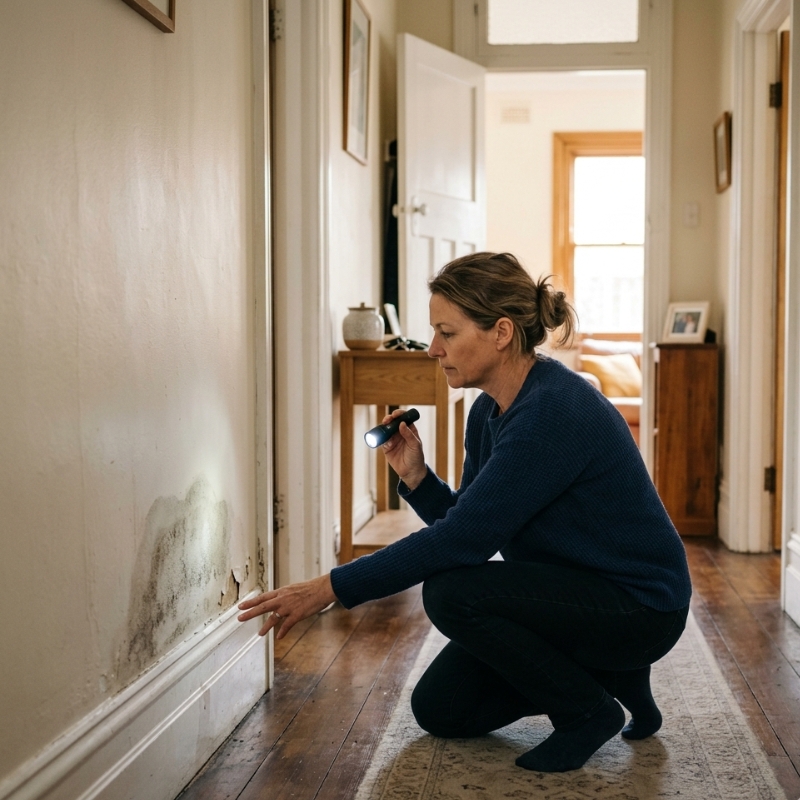
- Paint bubbling or peeling
- Plaster swelling or crumbling
- Warped skirting boards
- A “salty” residue or recurring stain that reappears after drying
- Musty smells that persist even with ventilation
In older Sydney homes, leaks can track along timber framing or behind plaster, making the “wet spot” appear away from the actual pipe issue.
The “leak triage” checklist: what to do based on what you’re seeing
If you see active dripping or pooling
Do this next:
- Contain water with buckets and towels
- Turn off the closest isolation valve (or main supply if unsure)
- Check upstairs bathrooms/laundry if the leak is on a lower ceiling
- Avoid puncturing swollen ceilings (they can collapse unpredictably)
If you see a ceiling bulge or sagging plaster
Treat this as urgent:
- Keep people out of the room
- Turn off water supply (main if unknown)
- If safe, isolate electricity to that area
- Contact strata (apartments) and organise licensed help
If you only have a damp patch or musty smell
Do this next:
- Run the meter test to confirm water is still flowing
- Check toilets, under-sink cupboards, dishwasher and washing machine hoses
- Look for wetness at the base of walls and around showers/baths
- Note whether the damp area grows after water use (showers, laundry cycles)
If you keep getting signs but can’t locate the source, it’s time for help with a hidden leak without resorting to guesswork that causes extra damage.
What you should not do (common mistakes that make things worse)
- Don’t keep using water “as normal” while you’re unsure — that can multiply damage fast
- Don’t cut holes in walls/ceilings based on a hunch (you may miss the source and create extra repairs)
- Don’t ignore water near electrical points
- Don’t assume mould is “just ventilation” if it’s new, spreading, or paired with staining
- Don’t keep resetting a toilet that keeps refilling — it often means continuous leakage
How to document the problem so it’s solved faster
Q: What information helps a plumber diagnose a concealed leak faster?
Collect these notes (even on your phone):
- When you first noticed it
- Whether it changes after showers, laundry, or flushing toilets
- Meter test result (start and end readings + time interval)
- Photos of damage and any visible drips
- Whether it’s hot (warm, damp patch) or cold
- Apartment/house details: upstairs bathroom above? shared wall? strata involvement?
This short “leak diary” can reduce trial-and-error and speed up finding the source of a leak.
Apartment and strata considerations in Sydney
If you’re in a unit or townhouse, a suspected leak can involve:
- Your lot (internal fixtures and pipes serving your apartment)
- Common property (shared risers, common walls, roof, waterproofing)
- The unit above/beside you
Practical first steps:
- Notify the strata/building manager early if the leak might involve common property
- If the leak appears from the ceiling, contact the neighbour above (or strata) immediately
- Take photos and keep a written timeline
Even if responsibility is still being clarified, isolating the water supply (where possible) and documenting the issue protects everyone.
When is it time to stop DIY checks and call a licensed plumber?
Call urgently if:
- Water is near the electrical fittings or the switchboard
- The ceiling is bulging/sagging, or water is coming through the light fittings
- The meter shows continuous flow, and you can’t isolate the leaking area
- You suspect a burst pipe or fast-moving leak
- You’re in an apartment, and the leak may be affecting other lots
Call soon (within 24–48 hours) if:
- Damp patches are growing or returning after drying
- Musty smells persist, and you can’t find a simple cause
- Mould is appearing quickly in new areas
- Your water bill or meter test strongly suggests a concealed leak
For non-invasive diagnosis and to avoid unnecessary wall damage, leak detection specialists can pinpoint issues using professional methods rather than guesswork.
Practical mini Q&A (quick answers homeowners look for)
Q: How can I tell if a leak is behind the wall?
If you have repeated staining, bubbling paint, warped skirting, or musty smells — especially if the meter test shows movement when everything is off — a concealed wall leak becomes likely.
Q: Can a leak stop and start?
Yes. Some leaks show up only when certain fixtures are used (showers, washing machine cycles), or when pressure changes. That’s why timing notes matter.
Q: What’s the fastest way to reduce damage?
Turn off the water supply (closest valve possible), keep wet areas ventilated, and photograph everything before drying and moving items.
Q: Is a running toilet really that serious?
It can be. Silent toilet leaks can waste large amounts of water and often explain a high bill without obvious puddles.
FAQ: suspected indoor water leaks in Sydney homes
What should I do first if I suspect a water leak inside my home?
Prioritise safety, then isolate the water. If it’s safe, shut off the nearest isolation valve or the main supply, take photos, and run a meter test to confirm whether water is flowing when everything is off.
How do I confirm a leak if I can’t see any water?
Do a water meter test: turn off all fixtures, avoid using water for 10–20 minutes, and check whether the meter reading changes or the flow indicator moves.
Why is my water bill suddenly higher if nothing looks wrong?
Common causes include a silent toilet leak, hot water system leaks, irrigation issues, or increased usage. A meter test helps confirm whether it’s a leak versus a lifestyle/seasonal change.
What are the most common indoor leak sources?
Toilets, hot water system valves/connections, under-sink pipework, shower/bath waterproofing issues, and appliance hoses.
Is mould always a sign of a leak?
Not always. Bathrooms can grow mould from humidity, but if mould is new, spreading, paired with staining, or appearing outside wet areas, it can signal a hidden moisture source.
Should I turn off the water at the meter?
If the leak source is unknown or damage is progressing, yes. It’s often the safest way to stop further water loss while you investigate or organise repairs.
When should I call a professional instead of checking myself?
If water is near electrics, the ceiling is bulging, the meter shows continuous flow with everything off, or you cannot isolate the leak area, you should call a licensed plumber promptly.

