



Pipe Relining vs Pipe Replacement: Which Is Right for Your Sydney Home?
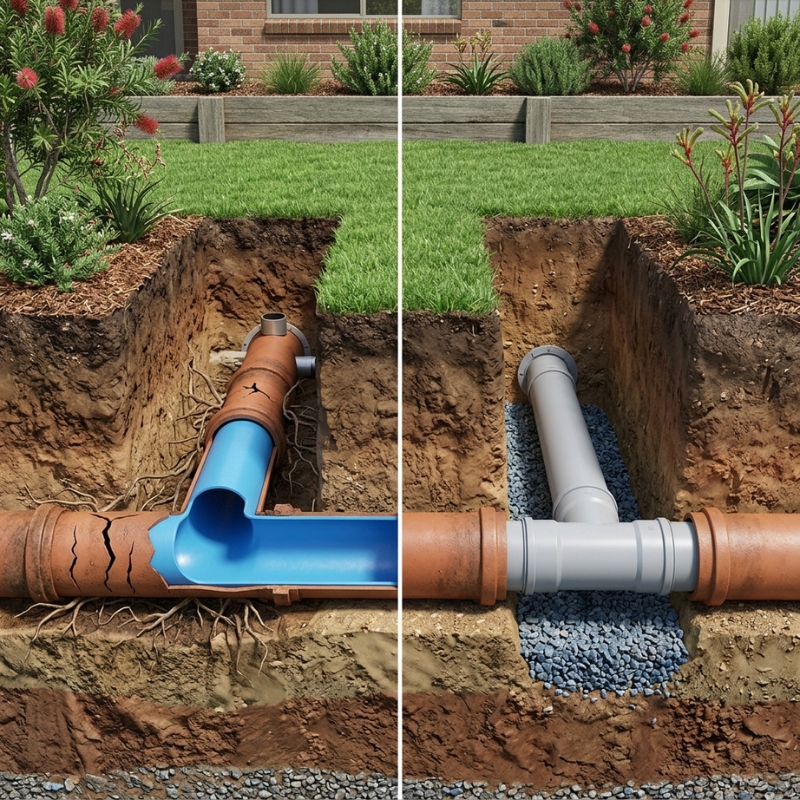
When a drain pipe cracks or roots find their way in, you are usually faced with two paths: reline the pipe or dig it up and replace it. If you are a Sydney homeowner weighing that decision, you want to know which one actually suits your situation, not just which one a salesperson prefers. This guide lays out both methods in plain terms. Apex Plumbing Services put it together to help you understand how pipe relining in Sydney compares with full replacement on cost, disruption and how long the repair lasts. We also explain how a camera inspection removes the guesswork, so you can make a confident, informed call about your own pipes.
Quick answer: Pipe relining repairs a damaged pipe from the inside using a resin liner, with little or no digging, which makes it ideal when the pipe is intact enough to reline, and you want to avoid tearing up paving or gardens. Full replacement is the better choice when a pipe has collapsed or is badly misaligned. Apex runs a CCTV inspection first, then recommends the option that genuinely suits your pipe.
How pipe relining works (in plain English)
Pipe relining is a no-dig repair, and once you see the steps, it is easy to follow.
First comes a CCTV inspection. A small camera is fed down the drain so the plumber can see the exact condition of the pipe, find the damage and confirm relining is suitable.
Next, the pipe is cleaned. A high-pressure water jet clears out roots, grease, scale and debris so the new liner can bond to a clean surface. Skipping this step would leave the repair sitting on top of the very build-up that caused the trouble.
Then the liner goes in. A flexible sleeve coated in a strong resin is pulled or inflated into position inside the old pipe, following its shape.
The resin is left to cure, or harden, which forms a smooth, rigid new pipe within the old one. Depending on the product and conditions, this can be done in hours rather than days.
Finally, a second camera run confirms the liner has set correctly, and the drain is flowing as it should. The result is a structurally sound pipe with no trench across your yard.
When relining is the right call
Relining shines in a specific set of situations, and plenty of Sydney drains fit the bill.
It is well suited to pipes with cracks or fractures that are still holding their shape, and to pipes where tree roots have crept in through the joints. Root intrusion is one of the most common reasons behind recurring blocked drains in older suburbs, and a liner seals those entry points so the roots cannot return.
Relining also handles minor misalignment, where sections have shifted slightly, but the line is still largely intact.
It comes into its own when the pipe is hard to reach. If the drain runs beneath a paved driveway, an established garden, a concrete slab or a section of decking, digging it out means destroying the surface above it. A liner repairs the pipe from the inside through an existing access point, so the paving and plants stay where they are. For many homeowners, avoiding that collateral damage is the deciding factor.
When replacement is the better option
As good as relining is, it is not the answer for every pipe, and an honest plumber will tell you when replacement makes more sense.
A liner needs a host pipe to bond to. If a section has fully collapsed, there is nothing left to line, so that part has to be dug up and replaced. The same applies when a pipe has dropped or shifted so severely that its shape can no longer guide a liner through.
Pipes that are extensively corroded or degraded along their length can also be beyond relining. If the existing pipe is crumbling in multiple places, a new pipe is the sounder long-term investment.
In these cases, digging and replacing restores the drain properly rather than papering over a pipe that cannot support a repair. A CCTV inspection is what tells the two situations apart, which is why the camera always comes first.
Cost, disruption and lifespan compared
Rather than quoting figures that vary from job to job, it helps to compare the two methods on what actually affects your experience and your wallet.
| Factor | Pipe relining |
Full replacement
|
| Digging | Little to none |
Trench along the pipe
|
| Yard and paving | Left intact |
Often needs restoring
|
| Time on site | Usually faster |
Longer, more labour
|
| Mess and clean-up | Minimal | Significant |
| Lifespan | Long-term structural repair |
New pipe, long lifespan
|
| Best suited to | Intact but damaged pipes |
Collapsed or severely degraded pipes
|
Because relining avoids excavation, it usually means less disruption, a quicker turnaround and no bill for rebuilding a driveway or garden bed afterwards. That is often where the real savings sit. Replacement can still be the more economical choice over the life of the pipe when the existing line is too far gone to save. The right answer depends on the condition of your specific pipe.
How Apex decides which you need
Apex does not guess, and we do not push one method because it suits us. Every job starts with a CCTV inspection so we can see the true condition of your pipe before we say a word about repairs.
From there, we give you an honest recommendation based on what the camera shows. If your pipe can be relined, we will tell you, because it usually saves you time and disruption. If it genuinely needs replacing, we will explain why and show you what we found. You get a clear price before any work begins, and because there is no call-out fee, an inspection and quote does not cost you just to get an answer.
Frequently Asked Questions
How long does pipe relining last?
Relining is designed as a long-term structural repair, and a properly installed liner is built to last for decades. The exact lifespan depends on factors like the condition of the surrounding pipe, ground movement and how the drain is used, but it is intended as a permanent fix rather than a patch.
Is pipe relining cheaper than replacement?
It often works out more cost-effective, mainly because it avoids excavation and the cost of restoring paving, driveways or gardens afterwards. That said, it depends on your pipe. For a straightforward, accessible replacement, the gap can be small, so the honest answer is that it varies from job to job.
Can every pipe be relined?
No. Relining needs an existing pipe for the new liner to bond to, so a fully collapsed or severely misaligned pipe usually needs replacing instead. A CCTV inspection is the only reliable way to confirm whether your pipe is a candidate for relining or not.
The bottom line
Choosing between relining and replacement comes down to the condition of your pipe. Relining is the no-dig, lower-disruption option when the pipe is damaged but still intact, while replacement is the right move when it has collapsed or degraded beyond saving. The good news is you do not have to make that call alone. Apex is a licensed Sydney team offering honest advice and straightforward pipe relining in Sydney, with clear pricing and no call-out fee. For a CCTV inspection and an upfront recommendation, book online or call the team on 1300 096 668.

