





Under-Sink, Whole-House or Reverse Osmosis? Choosing the Right Water Filter for Your Sydney Home
Once you have noticed something off with your water, a funny taste, a chlorine smell, discolouration or scale building up on the kettle, the decision to filter is usually the easy part. The harder question is which type of filter to fit.
Most Sydney homes end up choosing between three options: an under-sink filter, a whole-house system, or reverse osmosis. They all clean your water, but they solve different problems and sit in different parts of your plumbing. Here is a plain look at how they compare, what each one removes, and how to land on the right fit for your home.
The three filter types most Sydney homes choose, and what each one removes
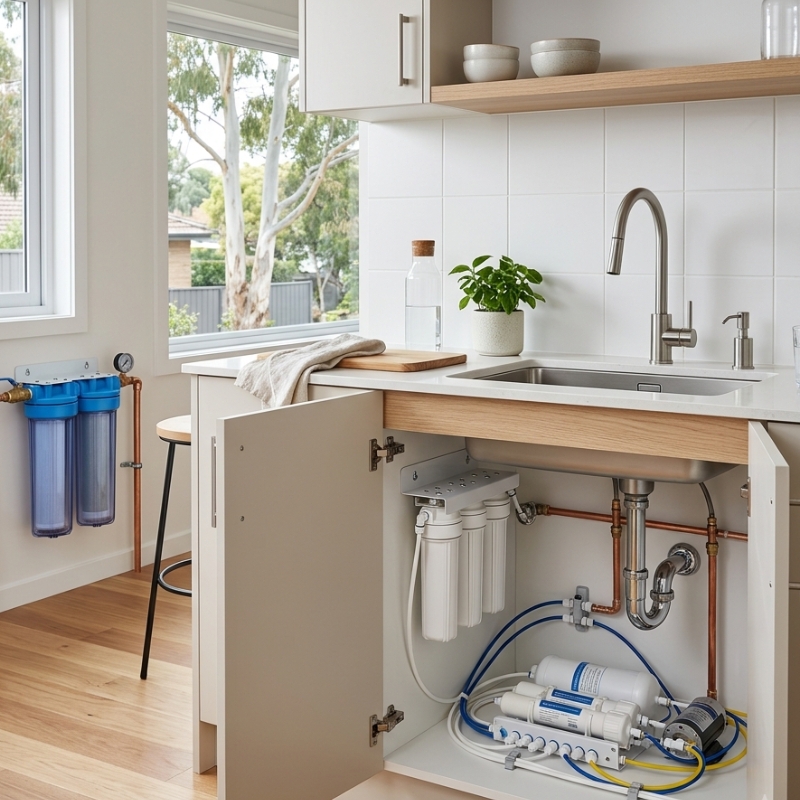
The three come down to where they treat the water and how far they take it. An under-sink filter sits at the kitchen tap and cleans the water you drink and cook with. A whole-house system connects at the main line so every tap in the home runs through it.
Reverse osmosis is a point-of-use system that pushes water through a fine membrane for the highest level of purity, usually at a single tap. In broad terms, carbon and sediment filters reduce chlorine, sediment and the tastes and odours that come with them, while reverse osmosis reduces a wider range of dissolved contaminants as well. Sydney’s supply is treated and tested against the Australian Drinking Water Guidelines, as Sydney Water explains, so filtering is usually about taste, odour and preference rather than basic safety.
| Filter Type | Where It Treats Water | Best For | What It Typically Removes/Reduces | Coverage |
| Under-Sink Filter | At a kitchen tap | Drinking and cooking water | Chlorine, sediment, tastes and odours | One tap |
| Whole-House Filter | At the main water line | Filtering water throughout the home | Chlorine, sediment, tastes and odours | All taps and outlets |
| Reverse Osmosis (RO) | Usually at a single point of use | Highest level of water purification | Dissolved contaminants, plus sediment and other impurities depending on the system | Usually one tap |
Which one is right comes down to your goal, your plumbing and your space, and a licensed plumber can match the system to your home and fit it correctly. When you are ready, you can book a professional installation and have the right unit sized and connected.
Under-sink filters: clean drinking water at the kitchen tap
An under-sink filter is the go-to when your main concern is better drinking and cooking water. It tucks away inside the cabinet and feeds either a dedicated filtered tap or a diverter on your existing tap, so it is discreet and does not change the water to the rest of the house. Systems like these are a practical choice for kitchens, units and rentals, and they typically reduce chlorine, sediment and the tastes and smells that go with them. The main upkeep is a straightforward cartridge change on a schedule. Because the filter taps into the pressurised cold water line, a licensed plumber should make the connection so it is leak-free and easy to service later.
If you are still weighing up whether your water needs filtering in the first place, the signs it is time to test and filter your Sydney tap water are a sensible starting point.
Whole-house filtration: when treating every tap is worth it
A whole-house system works at the point where water enters your property, so everything downstream runs through it, the kitchen, the bathrooms, the laundry and your appliances. It suits households that want filtered water at every tap rather than just the kitchen, and many people prefer it for showering and washing as well as drinking. The trade-off is that it is a larger job with more plumbing, it needs room at the main, and it is not always practical for units, which often lack the separate connection point a whole-house setup wants.
The install is more involved than a point-of-use filter, and we walk through what it takes in our guide on installing a whole-house water filter.
Reverse osmosis: the highest purity option and its trade-offs
Reverse osmosis goes a step further than a standard carbon filter. It forces water through a semipermeable membrane, which reduces a broader range of dissolved contaminants and produces very pure water, usually delivered at a dedicated tap by the kitchen sink. That purity comes with a few trade-offs worth knowing. An RO system needs space under the sink, adequate water pressure and a waste line, since it sends some water to drain as part of the process, and it works a little slower than a simple filter. Maintenance covers both the pre-filters and the membrane, and some systems add a stage to reintroduce minerals for taste.
It is a strong fit if you want maximum purity for drinking and cooking and can accommodate those requirements. We go deeper on how it works and where it suits a home in our guide on whether reverse osmosis is the right way to filter your water.
Frequently asked questions
Which water filter is right for my home?
It depends on what you want to improve and where. An under-sink filter suits better drinking water at the kitchen tap, a whole-house system treats every tap in the home, and reverse osmosis gives the highest purity at a single tap. Your space, plumbing and budget all play a part, so a quick assessment with a licensed plumber is the surest way to choose.
Do I need a whole-house filter or just an under-sink one?
If your main goal is cleaner drinking and cooking water, an under-sink filter usually does the job. If you want filtered water at every tap, including showers and the laundry, a whole-house system is the one to look at. Many homes are well served by an under-sink filter alone.
Is reverse osmosis worth it?
Reverse osmosis is worth considering if you want the highest level of purity for drinking and cooking and can accommodate the trade-offs, namely the space, the waste line, the slower flow and the membrane maintenance. If your concern is mainly chlorine, taste and odour, a good under-sink carbon filter may be enough.
What does each type of water filter actually remove?
In general terms, under-sink and whole-house carbon and sediment filters reduce chlorine, sediment and the tastes and odours linked to them. Reverse osmosis reduces those plus a broader range of dissolved contaminants through its membrane. The exact result depends on the specific system, so it is worth checking the unit’s rated performance.

