










Is Your Sydney Tap Water Really Safe to Drink? Key Signs It’s Time to Test and Filter
Sydney Water’s treatment plants consistently rank among the world’s best, yet many households still complain about odd tastes, recurring limescale and even skin irritation. How can both statements be true? Simply put, raw water quality changes, pipes age and each home’s plumbing adds extra variables long after water leaves the treatment plant. This article unpacks the practical warning signs homeowners should watch for, the local events that commonly shift water quality around Greater Sydney and when to move from simple monitoring to professional water filter solutions. By the end, you’ll know how to read what your senses, fixtures and even pets are telling you about the water coming from your tap.
What Happens to Sydney Water Before It Reaches Your Tap
Sydney’s public supply starts in Warragamba Dam, the Upper Nepean catchment and several smaller sources. Water then travels through:
- Coarse screening and coagulation to remove larger debris and algae
- Sand filtration for fine sediment
- Chlorination and sometimes chloramination to control microbes
- Fluoridation for dental health
- Kilometres of bulk mains, district mains and finally your street pipes
Every step is strictly monitored, yet variation still occurs because:
• Source water quality changes after heavy rainfall or bushfires
• Chlorine can dissipate over long pipe runs, allowing microbial regrowth in dead ends
• Old galvanised or copper pipes inside older suburbs can leach metals, especially after works disturb sediments
• Some homes use rainwater top-ups, pressure bores or recycled water connections that mix with tap water through cross-connections
Knowing the journey explains why two streets apart can report different taste or odour issues on the same day.
Everyday Clues Your Tap Water Quality Might Have Shifted
We often trust our senses for food freshness but ignore them for water. Here are the most common perceptible signs something has changed.
Metallic, Earthy or Chemical Taste
A new metallic tang might hint at elevated iron, manganese, copper or even low-level zinc from older pipework. An earthy taste often follows algal blooms in dam water during warm spells. A chemical or “pool” flavour reflects higher chlorine dosages after heavy rain.
Musty or Rotten-Egg Smell
Sulphur-producing bacteria thrive in low-flow pipe sections. You may notice this odour in the morning after water has sat in pipes overnight.
Cloudiness or Milky Appearance
Tiny air bubbles cause temporary cloudiness and usually clear from the bottom of the glass upward. Persistent turbidity, especially with visible particles, can point to sediment or pipe scale disturbed by recent works.
Discoloured Fixtures and Laundry Stains
Brown or orange marks suggest iron, while blue-green staining signals copper corrosion. Scale on kettles and showerheads reveals high hardness (calcium and magnesium).
Dry Skin, Itchy Scalp or Dull Hair
Chlorine is an effective disinfectant, yet it can strip natural oils. Sensitive skin often reacts first.
Pets Refusing to Drink
Cats and dogs have keener senses. A sudden refusal sometimes warns of taste or odour changes you have not yet noticed.
Quick Comparison of Visible Signs
Below is a fast reference table to help you decide when to keep an eye on changes and when to act faster.
| Situation | What It May Indicate | Sensible Next Step |
| Cloudiness that clears within 30 seconds | Trapped air, often harmless | Monitor a few days |
| Cloudiness with floating particles | Sediment or pipe scale | Run tap 2 minutes then consider testing if persists |
| Brown stains on sinks / clothes | Elevated iron or manganese | Arrange water analysis |
| Bleach-like odour in multiple taps | Higher chlorine dose | Flush lines, note if sensitive |
| Dry, itchy skin after showering | Chlorine sensitivity or hardness | Evaluate shower filter |
| Metallic taste from one bathroom tap only | Possible local pipe corrosion | Check galvanised pipes, sample test |
Short-term cloudiness alone is rarely hazardous, yet recurring colour or odour deserves attention.
Seasonal and Local Events That Influence Water Quality
Sydney’s coastal climate, ageing infrastructure and booming construction create several recurring triggers:
- Heavy Rain After Drought
• Flushes organic matter, pesticides and sediments into dams.
• Utilities raise chlorine doses, so pool-like smells increase. - Bushfire Ash Runoff
• Charred debris introduces carbon compounds, producing earthy tastes.
• Fine ash can clog household sediment screens quicker than usual. - Water-Main Repairs or New Subdivisions
• Pressure changes and valve operations dislodge mineral scale.
• Brown water outbreaks spike in older suburbs like Inner West or Northern Beaches. - Summer Algal Blooms
• Warm, nutrient-rich reservoirs grow blue-green algae.
• Treatment processes remove toxins but earthy odours may linger. - Coastal Storm Surges
• Salt spray can contaminate rooftop rainwater tanks in beachside homes from Cronulla to Manly.
• Elevated sodium corrosion risks for stainless appliances.
Understanding these patterns helps you link a sudden change in taste or appearance to an external event rather than panicking about isolated contamination.
At-Home Checks vs Laboratory Testing: Which Is Right for You?
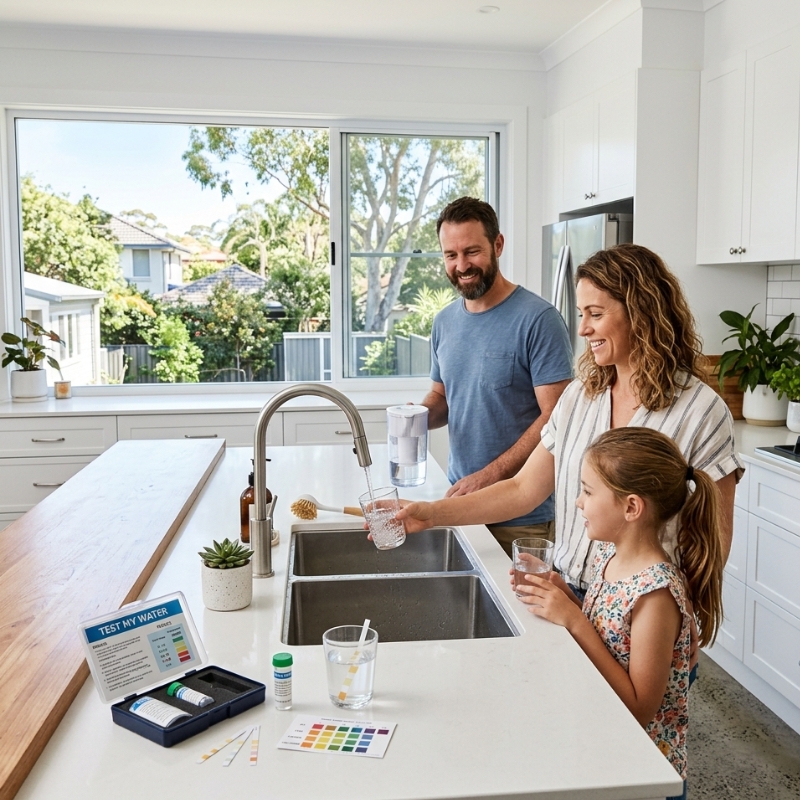
Many chemist chains now sell DIY strips that promise instant answers. They can be handy but they’re not a complete picture.
| Type of Test | Measures | Typical Accuracy | Cost Range | When It Makes Sense |
| DIY Test Strips | pH, hardness, chlorine, iron (basic) | ± 10–20% | $25–$50 kit | Quick snapshot, renters, first indication |
| Digital Handheld Meters | TDS, conductivity | ± 2–3% | $30–$120 | Frequent monitoring, aquarium owners |
| Mail-In Sample Kits | Heavy metals, pesticides, bacteria, fluoride | Lab-grade | $100–$300 | Families with infants, immune concerns |
| Local Council or Private NATA Lab | Full chemistry and microbiology suite | High | $250–$600 | Persistent issues, property sale, rainwater supplies |
| Real-Time Smart Sensors (installed) | Chlorine, pH, flow anomalies | High once calibrated | $400–$1,200 + subscription | Holiday rentals, high-end homes, water-dependent pets/plants |
Remember, even the best lab report is a single point in time. Combining simple weekly visual checks with periodic laboratory analysis gives the most reliable picture.
Common Contaminants and Their Impact on Health and Plumbing
Below are the key substances Sydney homeowners ask about most:
• Chlorine – Essential for disinfection but dries skin, fades clothing and can aggravate asthma when shower steam carries it into lungs.
• Lead – Legacy solder joints or brass fixtures can leach minute quantities. Risk multiplies in homes built before 1985.
• Copper – Corrosive water dissolves copper from pipes, causing blue-green stains and potential gastrointestinal upset.
• Iron & Manganese – Cause orange or black staining and metallic taste. Long-term build-up clogs fixtures.
• Microplastics – Emerging concern. Treated water usually contains low levels yet accumulates in carafes and kettles over time.
• PFAS (Per- and polyfluoroalkyl substances) – Industrial chemicals found in some catchments. Regular treatment removes most, yet point-of-use activated carbon filters are effective extra barriers.
• Hardness (Calcium/Magnesium) – Not a health threat, but scales appliances and reduces soap lather.
Official limits are set by the Australian Drinking Water Guidelines and local utilities publish regular compliance reports. If results show levels within guidelines yet you still experience taste or skin concerns, a filter can improve palatability even when health standards are met.
For deeper reading, see the NSW Health drinking water overview that outlines current state monitoring requirements.
When a Filter Makes Sense: Point-of-Use vs Whole-House
Choosing between an under-sink system and a whole-home unit depends on several everyday factors:
- Source of Concern
• Drinking only: point-of-use.
• Skin irritation, laundry stains, appliance scale: whole-house. - Installation Space and Plumbing Access
• Inner-city terraces often lack meter-side room for big housings.
• Under-sink cartridges fit even compact kitchens. - Flow Rate Sensitivity
• High shower pressure fans notice drops with small cartridges.
• Larger multi-stage systems maintain household flow. - Maintenance Commitment
• Point-of-use filters require frequent, low-cost cartridge changes.
• Whole-house media often lasts years but costs more to replace. - Budget vs Long-Term Savings
• A $200 chrome tap filter is cheap yet only protects one outlet.
• A $1,500-plus whole-home setup preserves every fixture, extending appliance life.
The key is matching filtration grade (micron rating) and media type (carbon, KDF, reverse osmosis, UV) to the specific substances found in your tests.
Link to further reading
Maintenance intervals matter. See how water quality affects filter lifespan for cartridge timing guidelines and signs a filter is overloaded.
Mistakes to Avoid When Judging Your Water Quality
- Assuming crystal-clear water is always safe – Many dissolved contaminants are invisible.
- Trusting boiling as a catch-all – It kills bacteria but won’t remove metals, chemicals or microplastics.
- Forgetting the hot-water line – Hot taps bypass many under-sink filters.
- Ignoring subtle odour changes until guests comment – Early testing saves guesswork later.
- Swapping cartridges only when flow slows – Some filters clog late, so follow calendar intervals.
Questions to Ask Before Investing in Any Filter System
• What specific contaminants do my lab results highlight?
• Will an under-sink, countertop or whole-house unit address those effectively?
• What is the maximum flow rate the household demands during peak morning use?
• How easy is cartridge access for future replacements?
• Does warranty coverage require installation by a licensed plumber?
• Are replacement cartridges stocked locally or only online?
• How will filter flush water be handled in a unit or strata setting?
• Can the system be bypassed if maintenance is delayed?
Having these answers on paper helps homeowners compare brands beyond flashy marketing claims.
Frequently Asked Questions
1. Does Sydney Water ever fail to meet national safety guidelines?
Occasional short-term exceedances do occur after extreme weather, but utilities must notify NSW Health and the public. In most cases, elevated chlorine or temporary boil notices are issued until levels return to normal.
2. Are fridge filters enough for Sydney households?
Fridge filters improve taste and remove some sediment and chlorine, yet they usually operate at 5–20 microns. That rating won’t catch heavy metals or fine microplastics. If lab tests show lead, copper or PFAS, an additional under-sink or whole-house system offers safer coverage.
3. How often should I test my tap water?
For standard metropolitan supply, annual professional testing plus simple monthly visual checks is adequate. Homes with rainwater tanks, private bores or immunocompromised residents may benefit from six-monthly tests.
4. Can I install a whole-house filter myself?
Under NSW plumbing regulations, any modification beyond a simple screw-on aerator should be carried out by a licensed plumber. DIY errors can void home insurance and introduce cross-connection risks.
Wrapping Up
Sydney enjoys excellent treated water on most days, yet household pipes, weather extremes and ageing infrastructure can introduce unexpected changes. Paying attention to taste, smell, colour, fixture stains and even your pet’s behaviour gives early clues. When something feels off, confirm with at-home strips or a laboratory test, then match a filtration approach to the specific issue. The result is better tasting water, healthier skin and appliances that last longer without scale. If you’re unsure which system suits your plumbing layout or water test results, talking through the options with a qualified plumber ensures your chosen filter adds genuine value rather than cost and clutter.

