












7 Early Warning Signs Your Stormwater System Is Overloaded During Heavy Rain
Sydney’s summer storms can dump a month’s worth of rain in a single afternoon. When that happens, a healthy stormwater network should whisk water away from roofs, driveways and garden beds before it can creep into walls or foundations. The trouble starts when leaves, silt, tree roots or damaged pipes choke the system. Because the blockage often hides underground, homeowners miss the early cues until water backs up dramatically. Spotting those cues early gives you a chance to clear debris or book help before the overflow turns into fully blocked stormwater drains and costly water damage.
Below are seven tell-tale signs Sydney households most often report in the hours or days after heavy rain, why they appear and what you can safely do next.
Why stormwater overload matters in a Sydney downpour
Greater Sydney combines steep block gradients, clay soils and plenty of leafy suburbs. During a cloudburst, tens of thousands of litres race off your roof and paved areas toward street kerbs. If underground pipes have narrowed or cracked, water can:
- Undermine footings and retaining walls
- Flood garages, granny flats or lower-level rooms
- Carry pollutants straight into local creeks, breaching council rules
- Soften clay soils then shrink them again in hot sun, stressing foundations
The NSW State Emergency Service recommends clearing gutters and drains well before storm season for exactly these reasons. Their storm preparation advice explains how proactive maintenance reduces flood risk.
Below, we translate that high-level advice into everyday warning signs you can check at home.
1. Water pooling around downpipes and gutters
If rainwater pools at the base of downpipes or spills over gutters, it usually points to a restriction further downstream. Sydney’s big eucalypts shed leaves and bark year-round, so even clean-looking gutters can refill in weeks. Pooling here often precedes a more serious overflow lower in the system.
What to check
• Look for leaf dams in the downpipe entry elbow.
• Inspect for dented or crushed downpipes, especially after ladder bumps or kids’ bikes.
• Confirm that surface drains below the downpipe aren’t buried under mulch.
Safe next step
Clear visible debris with gloved hands. If water still pools during the next shower, the blockage is likely underground and needs a camera inspection.
2. Gurgling or slow yard drains
Yard gully grates should drain water almost as fast as it flows in. A slow swirl or audible gurgle means air is trapped behind a blockage in the pipe. Because gurgling often appears before water breaches the grate, it is one of the best early alerts.
What to check
• Remove the grate and shine a torch down the pipe to look for leaves or sticks near the surface.
• Note whether the grate sits below surrounding soil. Heavy rain can wash soil in, creating a natural silt trap.
• Time how long a bucket of water takes to disappear when it is not raining. Slow drainage on a dry day confirms a restriction.
Safe next step
Try flushing with a garden hose. If gurgling returns during the next storm, deeper jetting or mechanical clearing is safer before pipe damage develops.
3. Backflow into downstairs or garage floor drains
During a storm, water pressure inside a partially blocked pipe can reverse flow through the nearest low-level outlet – usually a laundry, bathroom, or garage floor drain. You might see bubbly water rise then recede when the rain eases.
What to check
• Inspect rubber floor grate seals; cracked seals let backflow surface faster.
• Check whether the driveway slopes toward the garage, funnelling extra runoff into the floor drain.
• Look for mud stains on the walls around the drain, indicating past overflows.
Safe next step
Sanitise the area promptly to stop mould. Recurrent backflow demands a professional camera inspection as it signals high pressure build-up in main stormwater lines.
4. Overflowing stormwater pits or grates
Many Sydney homes have concrete stormwater “silt pits”. They trap sand before water enters pipes. When pits overflow, it means they are full or downstream pipes cannot handle the volume.
What to check
• Lift the pit lid (wear gloves) and measure silt depth with a stick. More than one-third full reduces capacity.
• Check that the outlet pipe from the pit is clear. Sometimes kid’s toys or tennis balls lodge here.
• Observe whether water level drops once rain stops. A slow drop points to a downstream restriction.
Safe next step
Scoop out built-up silt and leaves. If the pit still overflows in the next storm, the outlet pipe likely has roots or structural damage.
5. Damp patches on the lawn long after rain stops
A lawn that squelches days after rain can mean underground drains have cracked or joints have separated, letting water seep into soil instead of conveying it away.
What to check
• Compare damp sections of lawn with your stormwater pipe layout if known.
• Probe the ground with a screwdriver. Waterlogged soil will feel spongy deeper down.
• Watch for sinkholes forming – small depressions can reveal collapsed pipe sections.
Safe next step
Mark the patches so a plumber can locate them with pipe tracing equipment rather than excavating the entire line.
6. Musty smells near outdoor drains
Standing water trapped in pipes breeds bacteria and mould, creating earthy or musty odours around grates and overflow relief gullies.
What to check
• Smell around multiple drains to locate the worst spot – the source is often directly below.
• Check whether odours intensify after hot, humid weather (which accelerates bacterial growth).
• Look for insect activity. Drain flies often breed where water stagnates.
Safe next step
Pour a mild bleach solution down the offending grate to kill bacteria. Persistent smells mean water is not moving and should be investigated.
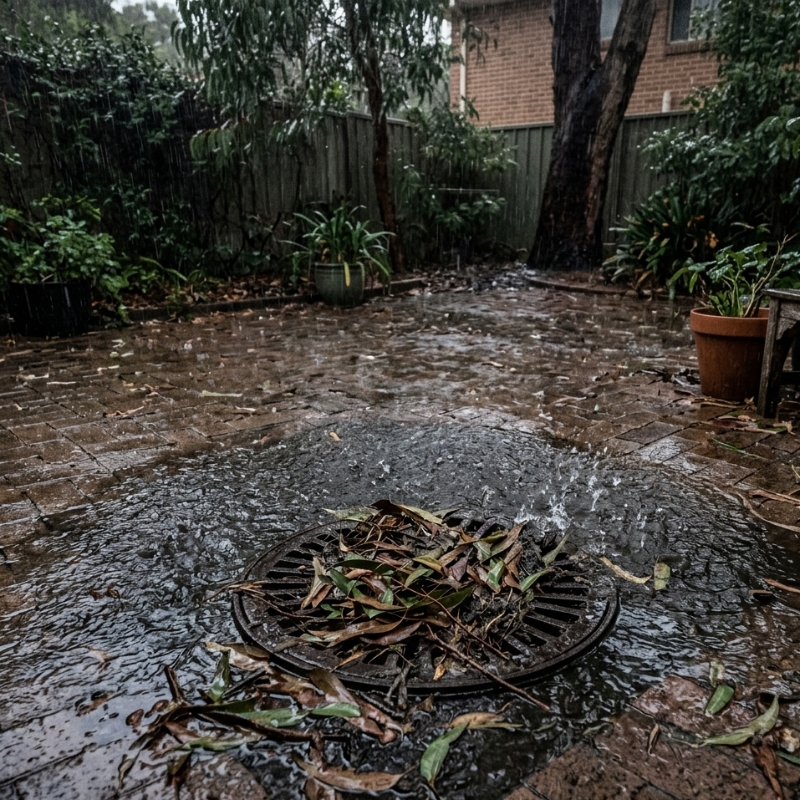
7. Visible debris washed up near drain openings
Heavy rain can push leaves, bark and even mulch out of stormwater grates and onto paths or the lawn. The tell-tale debris line shows water reversed direction under pressure.
What to check
• Identify which grate or pit ejected the debris; that is your blockage point.
• Note the debris type. Fine silt suggests erosion inside pipes. Coarser sticks suggest tree root intrusion.
• Check nearby garden beds for signs that mulch floated away, indicating surface runoff is bypassing the underground system.
Safe next step
Clear debris from the grate, then monitor the next rainfall. If debris reappears or volume increases, pipe condition has deteriorated and professional clearing is safer.
Minor vs serious stormwater signs – quick comparison
The table below summarises how to decide whether you can monitor a symptom, attempt a light DIY clean or arrange professional clearing.
| Situation | What it May Mean | Suggested Next Step |
| Small leaf build-up under a grate, water still drains within 30 seconds | Local surface debris only | Remove leaves, re-test next shower |
| Gurgling sounds but no visible overflow | Partial blockage or trapped air | Flush with hose, monitor next storm |
| Backflow through indoor floor drain | High pressure in system, possible major blockage | Arrange a professional camera inspection |
| Overflowing pit or water pooling for hours | Downstream restriction or collapsed pipe | Jet cleaning or excavation likely needed |
| Persistent musty odour outdoors | Stagnant water in pipe | Disinfect, then book inspection if smell returns |
A professional plumber will confirm pipe integrity with CCTV and recommend jetting, root cutting or relining if damage is found.
Common mistakes homeowners make when investigating stormwater issues
- Flushing with high-pressure hose from the wrong end – this can compact debris deeper.
- Pouring chemical drain cleaners into stormwater pipes – they rarely reach the blockage and can harm nearby plants.
- Ignoring “harmless” smells – odours often precede full blockages.
- Digging without Dial Before You Dig plans – hitting other services such as gas or NBN can be dangerous and expensive.
- Assuming one clear grate means the whole line is fine – the obstruction could be further downstream.
Avoiding these pitfalls can save hours of messy labour and reduce repair bills.
Safer DIY checks you can do before calling a plumber
- Clear leaves from gutters every three months, not just in spring.
• Install gutter guards if large native trees overhang the roof.
• Fit downpipe leaf diverters – inexpensive mesh baskets that stop big clumps entering pipes.
• Clean silt pits at least once a year or after major storms.
• Photograph problem areas during rain; footage helps plumbers diagnose faster.
Consistent maintenance often prevents minor issues escalating.
When a professional assessment is the safer next step
If you notice repeated backflow, rapid pooling or any new cracks in paved areas, calling a licensed plumber early is usually cheaper than post-flood repairs. A CCTV drain camera pinpoints obstructions without unnecessary digging. For extra reading on the limits of DIY stormwater work, see our guide on DIY clearing of blocked stormwater drains.
Questions homeowners often ask
- Can heavy rain really break stormwater pipes?
Intense rainfall usually exposes existing weaknesses rather than snapping pipes outright. However, saturated ground can shift, causing joints to separate or clay pipes to collapse, especially in older Sydney suburbs. - How quickly should pooled water disappear after rain?
On a typical suburban block with correctly sized pipes, minor puddles around grates should vanish within two to three minutes once rainfall stops. Longer than that suggests a restriction. - Will installing a rainwater tank reduce overload problems?
Yes, diverting roof runoff into a tank can lower peak flow in stormwater lines. Make sure overflow from the tank still connects to functioning pipes, or you may shift the blockage problem elsewhere. - Are tree roots or leaf litter the bigger threat?
Leaves cause more day-to-day blockages, but roots cause the most expensive pipe damage. A combination of regular surface cleaning and occasional root cutting keeps both in check. - Does council cover any stormwater repair costs?
Homeowners are usually responsible for pipes within their property boundary. Council maintains street kerb inlets and mains. Always verify boundaries before excavation.
Final thoughts
Early warning signs – from gurgling drains to lingering lawn sogginess – are your stormwater system’s way of asking for attention. Regular gutter cleaning, pit maintenance and visual checks go a long way, but when symptoms persist or intensify, timely professional inspection is the safest course. Acting on small clues today helps protect your home from the next Sydney downpour and keeps your stormwater network flowing freely.

