






How to Tell If You Have a Hidden Water Leak (Before It Wrecks Your Home)
Some leaks announce themselves with a dramatic burst. Others hide behind walls or under floors for months, quietly running up your bill and damaging your home before you ever spot a drop. If a high water bill, a damp patch or a nagging suspicion has brought you here, this guide will help you catch a hidden leak early. Apex Plumbing Services offers leak detection in Sydney, and we know the tell-tale signs to watch for and a simple test you can run yourself. Finding a hidden leak sooner rather than later can save you from structural damage, mould and a much bigger repair bill down the track.
Quick answer: Signs of a hidden water leak include an unexplained jump in your water bill, damp or discoloured walls and ceilings, a musty smell, reduced water pressure, the sound of running water when taps are off, and a water meter that keeps moving when nothing is on. A simple meter test can confirm a leak before you call a plumber.
6 signs you might have a hidden leak
Hidden leaks rarely stay hidden forever. These six signs are your early warning.
- An unexplained jump in your water bill. If your usage habits have not changed but your bill has climbed, water is escaping somewhere you cannot see.
- Damp or discoloured walls and ceilings. Yellowish stains, bubbling paint or patches that feel damp often sit directly above or beside a leaking pipe.
- A musty or mouldy smell. Persistent dampness breeds mould, and a musty odour that will not shift, particularly in a bathroom, laundry or cupboard, can signal moisture where it should not be.
- A drop in water pressure. If your taps or shower have lost pressure for no obvious reason, water may be leaking out of the line before it reaches them.
- The sound of running water when everything is off. A faint hiss or trickle in the walls when all taps are closed is a classic sign of a hidden leak.
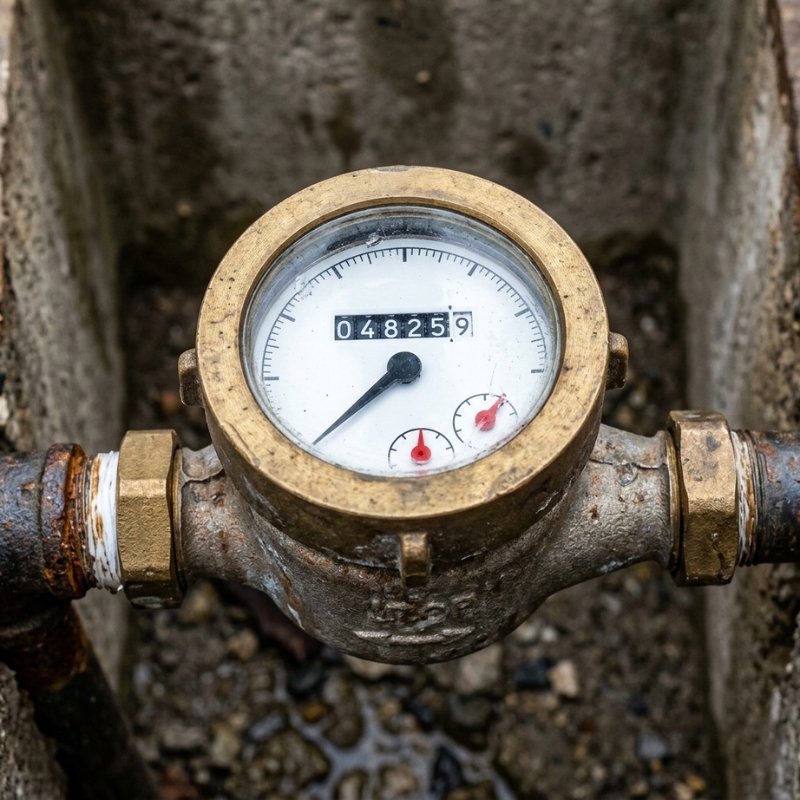
- A water meter that keeps ticking over. If the meter moves while nothing in the home is using water, that movement is almost always a leak.
Any one of these is worth investigating. Two or more together make a hidden leak very likely.
The 30-minute water meter test (DIY)
You can check for a hidden leak yourself in about half an hour, with nothing more than your water meter.
Step 1: Turn everything off. Switch off every tap inside and out, make sure the washing machine and dishwasher are not running, and ask everyone to hold off using water for the duration of the test.
Step 2: Read the meter. Find your water meter, usually near the front boundary, and note down the exact reading, including the small dials or digits.
Step 3: Wait and do not use any water. Leave everything off for around 30 minutes. It is important that nothing draws water during this time.
Step 4: Read the meter again. Compare the new reading with the first one.
If the meter has moved even though no water was used, you almost certainly have a leak somewhere on the property. Some meters also have a small leak indicator that spins when water is flowing, which is another quick clue. The test tells you a leak exists, but not where it is hiding, which is where professional detection comes in.
Where hidden leaks usually hide
Once you know a leak exists, the next question is where. Hidden leaks tend to favour a few usual spots.
Pipes running under a concrete slab are a common culprit, and these slab leaks are especially hard to spot because the water can travel before it surfaces. Pipes inside or behind walls are another, often showing up only as a damp patch or a stain.
Bathrooms are a frequent source, particularly the connections behind toilets, under vanities and around shower recesses where seals can fail over time. Hot water lines and the fittings around the hot water unit can also develop slow leaks.
Not every leak is a slow one, though. A pipe can fail suddenly and release a lot of water fast, which is when you need urgent burst pipe repairs rather than a leisurely search. Knowing the common hiding spots helps, but confirming the exact location usually calls for the right equipment.
How professional leak detection works
The good news is that finding a hidden leak no longer means tearing your home apart. Professional leak detection uses non-invasive methods to pinpoint the source before any repair begins.
Using specialised equipment such as acoustic listening devices and pressure testing, a plumber can trace a leak to a specific spot, often within a wall or under a slab, without guesswork and without unnecessary damage. Once the leak is located, the repair can be targeted and contained rather than exploratory. Apex offers leak detection across Sydney, gives you a clear price before starting, and charges no call-out fee, so getting the problem identified does not cost you just for the visit.
Frequently Asked Questions
How can I check for a water leak myself?
The simplest method is a meter test. Turn off every tap and water-using appliance, note your water meter reading, then wait about 30 minutes without using any water and check it again. If the meter has moved, you very likely have a leak somewhere on the property.
Can a hidden leak cause serious damage?
Yes. Left unchecked, a hidden leak can rot timber, damage plaster and foundations, encourage mould growth and drive up your water bills month after month. Because the damage builds slowly out of sight, it is often extensive by the time it becomes obvious, so acting early is well worth it.
Do you find leaks without digging up my floor?
Yes. Professional leak detection uses non-invasive tools such as acoustic listening and pressure testing to locate a leak first, so the repair can be precise. That means we can usually pinpoint the source without digging up floors or opening walls unnecessarily, keeping disruption and cost to a minimum.
The bottom line
A hidden leak can quietly damage your home long before you notice it, so learning the warning signs is time well spent. A climbing bill, damp patches, a musty smell, weak pressure or a meter that keeps moving all point the same way, and a quick meter test can confirm your suspicion. From there, professional detection finds the exact spot without the mess. Apex offers honest, licensed leak detection in Sydney with clear pricing and no call-out fee. If something is not adding up with your water, call the team on 1300 096 668.

