









Early Warning Signs Your Shower Drain Is About to Block in Sydney Homes
Nobody wakes up planning for a flooded bathroom. Yet across Sydney, blocked shower drains catch homeowners off-guard every day, leading to slippery floors, mould growth and costly water damage. Before the worst happens, there are subtle red flags most people miss. Spotting them early gives you time to try safe DIY checks or—if things look serious—schedule professional help via our blocked drains specialists rather than scrambling in an emergency.
In this guide, you’ll learn: • The common early symptoms of a shower drain on the brink
• DIY observations you can make in under five minutes
• What causes small issues to snowball into full blockages
• Mistakes Sydney homeowners often make (and how to avoid them)
• A quick-reference table comparing safe monitoring, DIY fixes and professional assessment
• FAQs drawn from real plumbing call-outs around the city
Whether your bathroom is in a coastal Bondi apartment or a century-old Federation terrace in Redfern, the core principles are the same. Let’s get ahead of that blockage before it gets ahead of you.
1. How a Shower Drain Becomes Blocked: The Sydney Context
Shower drains handle a cocktail of hair, soap scum, dead skin cells and the fine sandstone dust that seems to find its way into many Sydney homes. When these materials mix with the city’s often-hard water, they form a sticky film that clings to pipe walls. Over time, that film collects more debris until water can barely squeeze past.
Add in local habits—like rinsing off beach sand after a weekend at Manly or Bronte—and the build-up accelerates. If your property sits under leafy gums or jacarandas, airborne plant matter can also find its way into bathroom ventilation and settle in wet areas, further thickening the sludge in your pipes.
2. Subtle Warning Signs Most People Miss
Shower drains rarely go from free-flowing to fully blocked overnight. Watch for these early clues:
2.1 Water Pooling Around Your Feet
If water takes noticeably longer to disappear by the time you finish showering, build-up has already narrowed the pipe’s diameter.
2.2 Gurgling or “Glug-Glug” Noises
Air pockets trapped by partial blockages escape with a tell-tale gurgle after you turn the tap off.
2.3 Unpleasant Odours
Rotting hair and soap scum release sulphuric gases. If you smell a faint “rotten egg” scent, bacteria are thriving in stagnant water below.
2.4 Mould Growth on Tiles or Grout
Moisture lingering on bathroom surfaces creates perfect mould conditions—even if the fan runs. While mould has many causes, a sluggish drain is a common one.
2.5 Visible Debris When Water Recedes
Strands of hair, flakes of soap or sandy residue left behind once the water finally drains are an early alert that build-up is collecting just beyond the waste outlet.
3. Quick DIY Checks You Can Do in Under Five Minutes
Before you grab the plunger, confirm whether a blockage is forming.
- Remove the drain grate (if safe and easy).
- Shine a torch inside. Hair mats near the top can often be hooked out with a bent wire.
- Run warm (not boiling) water and watch the flow rate. Does it swirl sluggishly?
- Note any bubbling back into the tray—it means air is struggling to escape.
- Replace the grate securely; loose covers are trip hazards.
Safety tip
Avoid chemical drain cleaners unless you’ve confirmed the pipe material and ventilation are suitable. Harsh products can damage older copper pipes found in many pre-1990 Sydney homes.
4. DIY vs Professional vs “Wait and See”: A Practical Comparison
Sometimes a simple hair removal is enough. Other times, waiting will only make the eventual repair harder. Use the table below as a quick guide.
| Situation | Likely Cause | Safe Action | When to Call a Pro |
| Water drains slowly but no odour | Early hair/soap build-up near grate | Remove grate, hook out debris, flush with warm water | If problem returns within a week |
| Persistent gurgling plus musty smell | Deeper build-up further down the trap | Try a plunger, follow with a mild bicarb + vinegar flush | If noise/odour persist or worsen |
| Water backing up into other fixtures (e.g., basin) | Blockage in shared waste line | Plunge affected fixtures separately | If multiple fixtures affected at once |
| Standing water doesn’t clear in 5+ minutes | Severe blockage or collapsed pipe | Stop running water, avoid chemicals | Immediate professional jet-blasting or CCTV |
| Recent DIY reno debris flushed down drain | Tile grout or paint chips hardened | None — DIY may cement debris further | CCTV inspection and mechanical clearing |
Even if you’re handy around the house, some scenarios—like recurring blockages in a property with original 1960s gal pipework common in Inner West terraces—need specialised gear to prevent pipe damage.
5. Common Mistakes Sydney Homeowners Make (and How to Avoid Them)
- Pouring boiling water straight onto PVC waste pipes. Extreme temperature changes can soften or warp plastic, leading to leaks in concealed walls.
- Using caustic cleaners repeatedly. They may clear grease clots, but they also corrode metal pipes and rubber seals.
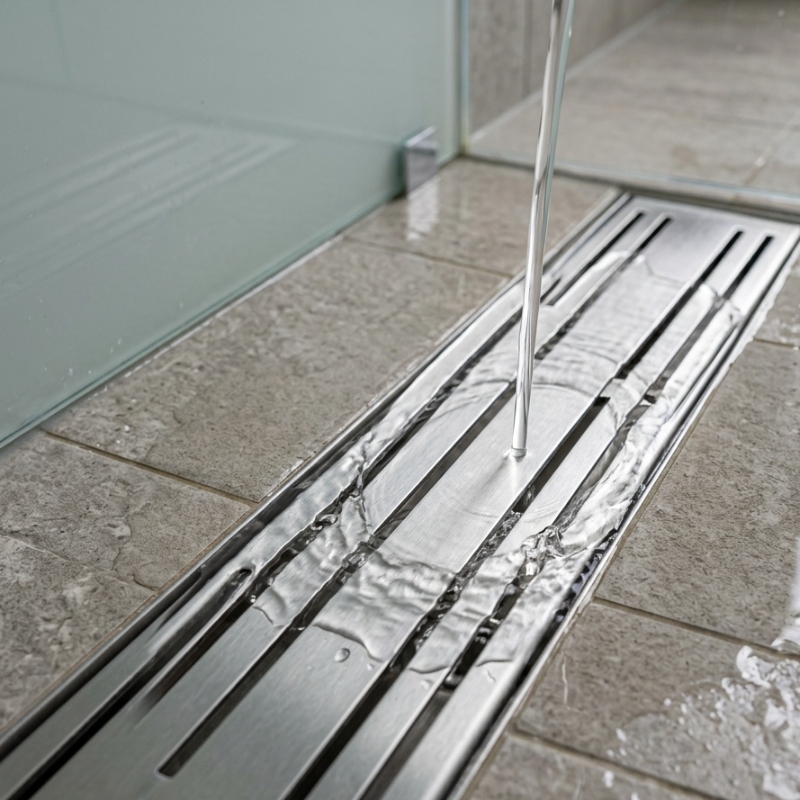
- Ignoring shower grate design. Older chrome-on-brass grates have wider slots than modern stainless models. Upgrading reduces hair entry dramatically.
- Rinsing sandy swimsuits in the shower. Knock or hose excess sand off outdoors first.
- Skipping annual roof/guttering checks. Leaf litter washed into downpipes in heavy rain can overburden connected stormwater lines, indirectly affecting bathroom drains in some combined systems.
For a more detailed rundown of safe techniques, see our practical guide on what are the best ways to unclog a shower drain?
6. What Affects the Complexity of Clearing a Shower Drain?
Several factors influence how tricky—and therefore time-consuming—a blockage may be to resolve:
• Pipe Material: Old galvanised steel can rust internally, trapping debris. PVC allows smoother flow but can sag if poorly supported.
• Access: Apartments often share vertical waste stacks behind tiled walls, limiting direct access.
• Previous Repairs: DIY work involving silicone sealants or makeshift grates can leave fragments that snag future debris.
• Water Hardness: Western Sydney suburbs drawing from Warragamba Dam sometimes report more limescale, increasing soap scum adhesion.
• Underlying Cause: Tree roots infiltrating cracked lines require root cutting and relining—not just a quick plunge.
Knowing these factors helps set realistic expectations before you pick up the phone.
7. Local Regulations and Health Considerations
Sydney Water reminds residents that sewer overflows caused by household blockages can attract fines if negligence is proven. Their official Sydney Water blockage guidelines outline homeowner responsibilities, including timely repair and safe disposal of wastewater. Keeping records of maintenance or professional clearance can help if issues escalate.
8. FAQs
1. How often should I clean my shower drain?
A monthly hair removal and warm water flush suits most households. In beachside suburbs where sand is an issue, aim for fortnightly.
2. Is baking soda and vinegar really effective?
It can break down light soap scum but won’t dissolve solid hair mats. Think of it as preventative, not curative, maintenance.
3. Can a blocked shower drain cause mould in other rooms?
Yes. Prolonged pooling elevates overall bathroom humidity, encouraging mould spores to settle on ceilings and adjacent wardrobes.
4. Why does the blockage keep coming back after plunging?
Plunging moves debris but doesn’t always remove it. Residue left behind quickly re-accumulates. Mechanical cable clearing or jet-blasting may be required.
5. Will insurance cover water damage from a shower overflow?
Policies vary, but insurers often deny claims if lack of maintenance is proven. Document routine checks and any professional work for peace of mind.
Conclusion
Spotting slow drains, gurgles or musty smells early can save you a weekend of mopping and expensive rectification works. A quick torch check and hair removal might be all that’s needed today, but if symptoms persist it’s safer to arrange a professional inspection before pipes fail completely. Staying proactive keeps your bathroom safer, your tiles mould-free and your mornings stress-free.

