







7 Early Warning Signs Your Hot Water System Is Struggling: A Practical Guide for Sydney Households
You turn on the tap expecting a steady stream of hot water only to be met with lukewarm drizzle, strange noises or rusty-coloured water. A failing hot water system rarely stops working without sending out distress signals first. Understanding those signs can save you from cold showers, water damage and an inconvenient emergency call-out.
In this guide we’ll break down the most common indicators of trouble, quick checks you can do safely, and when it’s time to reach out for professional hot water system support. While every brand and installation is slightly different, the principles below apply to storage tanks, heat pumps and continuous-flow units commonly found in Sydney homes.
Why Catching Problems Early Matters in Sydney Homes
Sydney’s mix of warm summers, cool winters and mineral-rich water places unique stresses on hot water systems.
• Mineral build-up happens faster in areas with harder water, which many suburbs around Parramatta, Penrith and Campbelltown experience.
• Coastal suburbs such as Cronulla or Manly often see accelerated corrosion due to salty sea air.
• Sudden cold snaps in the Blue Mountains or the Sutherland Shire can cause expansion and contraction within tanks and pipework.
Catching early warning signs means:
- Fewer surprise breakdowns during busy mornings.
- Lower repair bills compared with full system replacements.
- Reduced risk of flooding and mould from unnoticed leaks.
- Opportunity to upgrade to energy-efficient models before the old unit fails completely.
1. Inconsistent Water Temperature
Nothing ruins a morning faster than a shower that swings between scalding and icy.
Why It Happens
• Thermostat starting to fail.
• Sediment layering at the bottom of a storage tank, insulating the burner element.
• A continuous-flow unit struggling with sensor or flow valve issues.
What Homeowners Can Check
• Confirm the temperature dial on the unit hasn’t been bumped.
• Flush a few buckets of hot water from the tank’s drain valve (turn off power/gas first) to remove visible sediment if you’re confident with tools.
• Note if the issue only occurs when multiple taps run, pointing to demand rather than a system fault.
When to Call a Plumber
If temperature swings persist after a basic flush or affect all taps, the thermostat, sensors or heating element likely need professional testing and replacement.
2. Reduced Hot Water Pressure
A long wait for hot water is normal with distant bathrooms. A noticeable drop in pressure at every fixture is not.
Common Causes
• Sediment clogging tank outlets or tempering valves.
• Blocked aerators coinciding with internal corrosion flakes.
• Pipe scale or partially closed isolation valves after recent work.
DIY Check
• Unscrew one tap aerator to see if debris is caught there.
• Inspect the tempering valve (usually near the tank) to ensure it’s fully open.
Professional Solution
If debris returns quickly or multiple valves are clogged, a plumber may recommend a line flush, valve replacement or full system service.
3. Unusual Sounds: Rumbling, Popping or Whistling
Gurgling or kettle-like noises during heating cycles are more than an annoyance.
Likely Culprits
• Steam bubbles forcing through thick sediment layers.
• Scale causing hot spots on the element or bottom plate.
• Expanding metal rubbing against pipe brackets.
Monitor vs Repair
Occasional soft hums in older tanks can be harmless. Persistent, loud or worsening noises signal the need for deeper descaling or an internal inspection before the element burns out.
4. Rust-Tinged or Brown Water
Seeing rusty water when you first turn on the hot tap is a classic red flag.
What It May Indicate
• Sacrificial anode inside a storage tank has fully dissolved, allowing internal steel to corrode.
• Age-related tank wall corrosion.
• Reaction between hot water and galvanised pipework in older homes.
For a detailed look at iron-stained water and safe next steps, explore our article on why your hot water is suddenly brown.
5. Water Pooling Around the Tank or Unit
Even a few drops can hint at bigger problems.
Quick Inspection Checklist
| Area to Check | What You Might See | Possible Cause | Safe Next Step |
| Pipe joints above unit | Damp insulation or greenish copper stains | Minor weep at fitting | Wipe dry, recheck in 24 h |
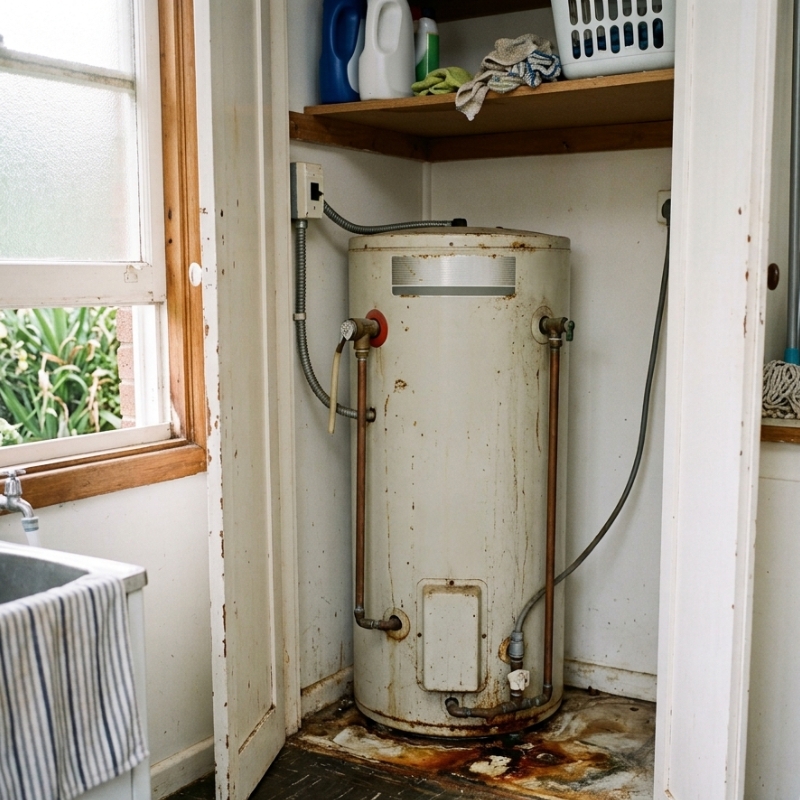
| Base of storage tank | Rust streaks, damp floor | Tank wall corrosion | Turn off water & power, call plumber |
| Pressure relief valve outlet | Occasional drips during heating | Normal pressure release | Short pipe to drain, monitor |
| Constant trickle from relief valve | Continuous water loss | Faulty valve or overheating | Valve replacement or system service |
If you spot ongoing moisture, isolate power/gas, close the cold inlet valve, and book a professional inspection to prevent electrical hazards or floor damage.
6. Spike in Energy Bills Without Lifestyle Change
Hot water often accounts for 25 % of a Sydney household’s energy use. A sudden unexplained jump can mean:
• Thermostat set too high or malfunctioning.
• Element constantly reheating due to insulation breakdown or concealed leaks.
• Sediment forcing longer heating cycles.
Track bills over a few months. If hot water charges soar while other usage stays steady, an efficiency check could pay for itself quickly.
7. Age: The Silent Countdown
Storage tanks typically last 8–12 years in Australian conditions; continuous-flow units 15–20 years with maintenance. Beyond those ranges, even minor repairs may only delay the inevitable.
How to Find the Manufacture Date
Look for a data plate or serial number on the unit. Many brands encode the year and week within the first four digits (e.g. 1912 = Week 12, 2019). If the sticker is unreadable, your plumber can usually confirm age via model codes.
Comparing DIY Monitoring vs Professional Assessment
When you catch an early sign, should you roll up your sleeves or book a pro? The table below outlines typical situations.
| Situation | Usually Safe DIY Actions | When to Book a Licensed Plumber |
| Minor sediment noises | Drain a bucket or two to flush sediment | Rumbling persists or sludge is thick |
| Single tap loses pressure | Clean aerator and check tempering valve | Low pressure across multiple fixtures |
| First hint of rust-tinted water | Replace tank anode if confident and unit is under 8 yrs old | Water stays brown, tank older than 10 yrs |
| Relief valve drips during heating | Place a container, measure volume (should be ≤ 1 L/day) | Constant trickle or > 1 L/day |
| Unit age approaching 10 yrs | Schedule annual inspection | Visible leaks, severe efficiency drop |
Remember: under NSW regulations, any work involving the potable water network, gas lines or electrical wiring must be performed by appropriately licensed tradespeople.
Common Mistakes Sydney Homeowners Should Avoid
- Turning the thermostat to maximum to “get hotter water faster”. This scalds, wastes energy and can stress the system.
- Ignoring small leaks because they “only drip a bit”. Slow leaks corrode fittings and can ruin cabinetry or flooring over time.
- Skipping annual relief valve testing. Valves can seize shut, turning your tank into a dangerous pressure vessel.
- Using incompatible replacement parts found online. Elements, thermostats or anodes that don’t match the manufacturer’s specs may void warranties.
- DIY gas work. It’s illegal and unsafe to open or adjust gas appliances without the correct NSW gasfitting licence.
What Affects the Complexity of Hot Water System Repairs?
Not all faults cost the same effort to fix. Key factors include:
• System type: Continuous-flow units often use sealed electronics, making repairs more specialised.
• Access: Rooftop solar boosters or cramped cupboards mean longer labour times.
• Corrosion level: Replacing an anode is straightforward if threads aren’t rusted solid. Severe corrosion can require cylinder replacement.
• Parts availability: Older or overseas brands may have long lead times for spares.
• Underlying cause: A burnt-out element caused by sediment build-up may recur if the tank interior isn’t fully flushed or the water softening isn’t addressed.
Sydney-Specific Factors to Keep in Mind
• Water quality zones: Sydney Water publishes hardness maps; if you’re in a harder area, schedule more frequent anode checks.
• Strata rules: Apartment owners should review hot water by-laws before undertaking work, especially for shared systems.
• Energy rebates: NSW offers occasional incentives for high-efficiency heat pumps or solar replacements. Check current programs on the Energy.gov.au guidance page.
Frequently Asked Questions
1. How often should I flush my storage hot water tank?
Flushing every 6–12 months helps minimise sediment, particularly in harder water suburbs. If your tank sits in a difficult-to-access cupboard, a plumber can attach a drain hose and perform a safe flush during an annual service.
2. My continuous-flow system keeps shutting off mid-shower. Could it be the gas supply?
Possibly. Low gas pressure, blocked filters or faulty flow sensors can all trigger safety shut-downs. Check that other gas appliances work correctly and have the unit serviced if the issue persists.
3. Is brown hot water dangerous to drink or bathe in?
Rust particles are generally not harmful, but they can stain clothes and fixtures. Persistent discolouration points to corrosion that may eventually lead to leaks, so professional inspection is recommended.
4. Can I just replace the thermostat myself?
Thermostat replacement involves electrical disconnection that must meet Australian Standards and, in many cases, require a licensed electrician or plumber-electrician. DIY replacement risks shock, fire or voided warranty.
5. At what point is it cheaper to replace than repair?
If your storage tank is over 10 years old, needs a major component like a cylinder or multiple elements, and is showing corrosion, replacement often proves more cost-effective long-term—especially with modern energy-saving models.
Final Thoughts
Recognising the early warning signs of hot water system trouble gives Sydney homeowners the best chance to act before small annoyances turn into soaked carpets or freezing showers. Keep an eye (and ear) out for temperature swings, pressure drops, strange noises, rusty water, leaks and energy bill spikes. Addressing issues promptly—whether through simple maintenance or a licensed plumber’s visit—extends system life and keeps daily routines running smoothly.

