












What Causes Burst Pipes in Older Sydney Homes?
Sydney’s character-filled terraces and post-war bungalows offer plenty of charm, but their original plumbing can hide unwelcome surprises. Ageing copper that has worn thin, galvanised steel that has long since corroded, and poly pipes that have reached the end of their design life can all fail suddenly, flooding walls, ceilings and floorboards. While you can’t turn back the clock on 50-year-old pipework, you can understand the pressures it is under and act fast when trouble strikes. If you ever face a sudden rupture, calling for experienced burst pipe repairs should be the first step after shutting off the water. Before it gets to that point, however, let’s look at why older Sydney homes are more vulnerable, the most common triggers for a burst pipe, and practical ways to reduce the risk.
1. Why Older Sydney Homes Are More Prone to Pipe Failure
Pipe materials, installation methods and water pressures have changed dramatically since the 1950s. Many original lines were never designed for today’s mains pressure or modern appliances that draw water in sudden spurts. Add decades of internal corrosion and external soil movement, and even a small weakness can open up.
1.1 Ageing Materials Reach End-of-Life
• Galvanised steel was phased out in the 1970s, yet some houses still rely on it. Once the inner zinc coating corrodes, rust eats through the wall until only a paper-thin shell remains.
• Old copper can suffer from internal pitting, especially if the water supply has fluctuating pH or dissolved oxygen.
• Early generation PVC and polybutylene weren’t formulated for the constant UV, heat or pressure they now endure, leading to brittle “pin holes” or full splits.
1.2 Higher Mains Pressure Than Decades Ago
Sydney Water’s network upgrades have lifted pressure in many suburbs. Where taps once saw ~300 kPa, some locations now hover around 500 kPa or more. Older joints and washers may not cope with the constant force.
1.3 Soil Movement in Established Streets
Mature tree roots searching for moisture can constrict, bend or pierce external pipes. Meanwhile, deeper excavations for renovations or pool installs can leave unsupported trenches that settle over time, stressing buried lines.
2. Seven Common Triggers Behind a Burst Pipe
Burst events rarely come out of nowhere. One or more of the following stressors tend to be involved:
| Trigger | Why It Matters | What Can Happen | Prevention Approach |
| Internal corrosion | Thins pipe wall until pressure blows it open | Fine jet turning into a ceiling or wall flood | Replace ageing galvanised lines, check copper thickness during renos |
| Water hammer (sudden pressure spikes) | Shockwaves hit joints at 1,000 km/h | Couplings crack or solder fails | Fit arrestors, secure loose pipes, see our guide on water hammer noises |
| Freezing nights in outer suburbs | Expanding ice presses outward | Long splits in exposed garden or under-house pipes | Insulate external runs, repair draughty sub-floors |
| Ground movement or heavy traffic vibration | Bends or shears pipe at weak spot | Buried pipe ruptures, soggy lawn | Flexible connectors, deeper bedding, root barriers |
| DIY drilling into walls | Nails or screws nick hidden lines | Slow leak becomes full burst | Use stud finders, consult plans before penetrating walls |
| High chlorine or acidic water pockets | Accelerates metal pitting | Pin-hole leaks that widen | Annual water quality testing, sacrificial anodes in hot water units |
| Poor previous repairs | Wrong coupling, excessive solder heat, mismatched metals | Joint gives way under normal pressure | Use matching materials, licensed plumber sign-off |
Even one of these factors can be enough to cause failure. When several happen together, the chance of a burst rises sharply.
3. Local Sydney Conditions That Add Extra Stress
Sydney’s climate and infrastructure contribute their own quirks:
• Summer storms: Sudden low-pressure fronts can create pressure fluctuations when pumps compensate, jarring old pipes.
• Coastal air: Salt-laden breezes in the Eastern Suburbs accelerate external copper corrosion, especially on unprotected balcony pipes.
• Clay soils in the west: Areas like Penrith and Blacktown experience pronounced soil shrink-swell, bending buried lines each season.
• Renovation boom: Inner-west terrace updates often re-route services through tight voids, leaving kinks or unsupported spans that later fail.
Keeping these geographical pressures in mind helps prioritise inspection zones around your property.
4. Early Warning Signs You Should Never Ignore
A crack rarely opens without a few hints first. Catching them early can save thousands in water damage repairs.
| Warning Sign | Likely Cause | Urgency Level | Action |
| Bang or thud when taps shut off | Water hammer | Medium | Fit arrestor, secure loose pipe runs |
| Unexplained high water bill | Hidden leak | High | Meter test, thermal camera, acoustic trace |
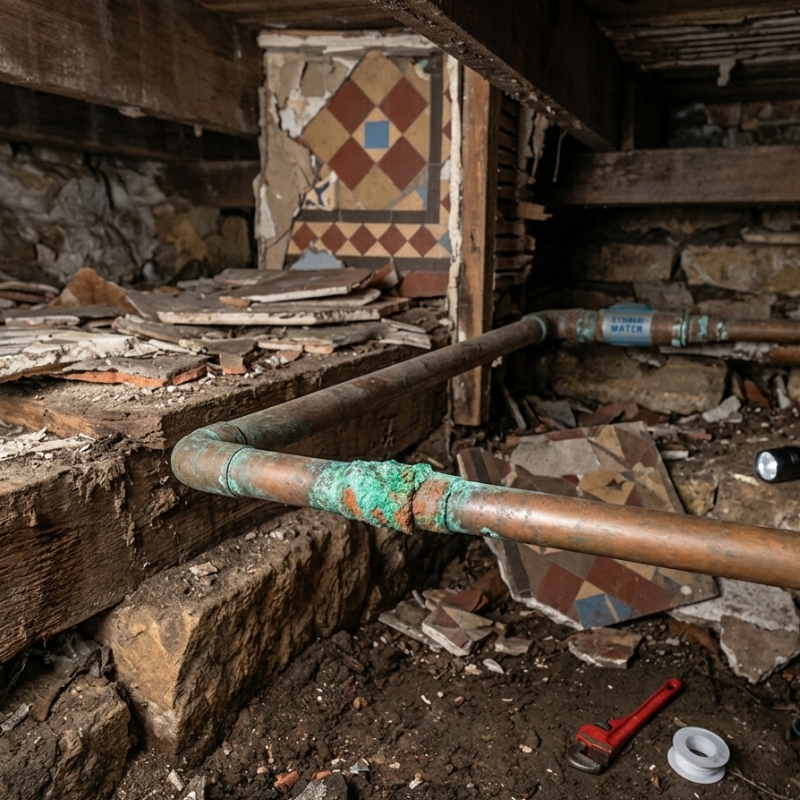
| Green or white staining on copper | Slow weep | Medium | Clean, inspect, consider re-pipe |
| Reduced flow in one outlet | Internal corrosion | Medium | Inspect section, replace if thinning |
| Damp plaster or bubbling paint | Steady leak behind wall | High | Turn off water, call plumber now |
If you spot two or more signs together, treat the situation as urgent.
5. Prevention Strategies That Work in Older Homes
5.1 Pressure Management
Install a pressure-reducing valve (PRV) at the meter if readings exceed 500 kPa. This single upgrade eases load on every joint inside.
5.2 Scheduled Pipe Health Checks
• Every five years, have a licensed plumber use a borescope or ultrasonic thickness gauges on suspect lines.
• During any renovation: expose and visually inspect concealed runs while walls or floors are open.
5.3 Material Upgrades in Stages
Full re-piping isn’t always affordable in one hit. Prioritise:
- High-risk hot water lines under constant pressure.
- Galvanised feed lines to kitchens and bathrooms.
- Exposed external garden or pool pipes.
5.4 Secure & Insulate
Loose pipes amplify water hammer. Strap them firmly to studs and joists with rubber-lined clips. In cooler western suburbs, add foam lagging to any section exposed to sub-five-degree nights.
5.5 Backflow & Isolation Points
Installing additional isolation valves allows you to shut off only the kitchen, bathroom or garden if a failure occurs, limiting disruption.
6. Mistakes That Can Turn a Small Leak Into a Disaster
- Ignoring minor pin-hole leaks because “it’s just a drip”. Internal pressure often widens the hole rapidly.
- Wrapping leaks with rubber and hose clamps as a long-term fix. These are emergency measures only.
- Mixing copper and galvanised without a dielectric union. Electrolysis will fast-track corrosion.
- Setting your hot water unit above 60 °C to “kill germs”. The higher temperature stresses joints and O-rings.
- Relying solely on pipe repair tape. It can’t withstand Sydney’s high summer mains pressures.
7. DIY vs Professional Help: How to Decide Quickly
| Situation | Safe DIY Step | When to Call a Plumber |
| Small, visible pin-hole in copper | Shut water, dry pipe, apply temporary epoxy patch | If pipe wall feels thin or leak is near a joint |
| Burst in flexible hose under sink | Replace with WaterMark-approved braided hose | If isolation valves are corroded or won’t turn |
| Hidden leak behind plaster | Turn off main, open taps to drain | Always – requires specialist leak detection |
| Recurring water hammer after fitting arrestor | Check PRV setting | If hammer persists or pipes remain unsecured |
| Galvanised pipe leaking at thread | None – threads usually rusted solid | Full section replacement by licensed plumber |
A good rule of thumb: if you can’t see the entire problem or it involves soldering, cutting or high pressure, book a qualified professional.
8. Questions to Guide a Safer Repair Approach
Before proceeding with any repair, it helps to clarify the following:
- Was the pipe material installed before the 1980s (gal or early plastic)?
- Has there been previous patching in the same line?
- Does the water meter spin when all taps are off?
- Is mains pressure above 500 kPa?
- Are there large trees within three metres of the burst area?
The more “yes” answers you tick, the higher the chance a localised repair may fail again, and a sectional upgrade may be wiser.
9. When a Burst Happens: Immediate Steps
- Shut off the closest isolation valve, or the water meter if unsure.
- Turn on a nearby cold tap to relieve pressure.
- Safely unplug electrical items or switch off the affected circuit if water is near power points.
- Soak up pooled water with old towels to limit floor damage.
- Photograph the area for insurance before any clean-up begins.
- Call licensed burst pipe specialists once safe access is possible.
According to the NSW Government burst and leaking pipe advice, reporting the event promptly can also prevent fines if the issue affects the public main or footpath.
Final Thoughts
Burst pipes in Sydney’s older homes may be common, but they’re rarely random. Ageing materials, higher modern pressures, soil movement and even our summer storms all play a part. By recognising early warning signs, scheduling periodic inspections and upgrading the most vulnerable sections first, you can extend the life of your plumbing and avoid the havoc of an unexpected indoor waterfall. And if the worst does happen, swift isolation and professional assessment remain the safest path to a dry, stress-free home.
FAQs
- How long do copper pipes realistically last in Sydney homes?
Copper installed in the 1970s–80s often lasts 50+ years, but water chemistry, stray current corrosion and pressure surges can shorten that span. Annual inspections around hot water units and under sinks give a clearer picture of remaining life. - Can high water pressure alone cause a pipe to burst?
Yes. Consistently high pressure stresses every joint and thin section. A PRV set to around 350–450 kPa reduces risk and can also cut down water hammer noises. - Are flexible braided hoses a safe replacement for old copper?
Only if they carry the WaterMark and are installed correctly. Cheap, unbranded imports fail early. Replace braided hoses every five years or if there’s any fraying. - Why do bursts often happen at night?
Night-time sees fewer taps running, so static mains pressure climbs. A weak spot that copes during the day may finally let go when pressure peaks after midnight. - Does home insurance cover burst pipe damage?
Policies usually cover sudden, accidental water damage but may exclude gradual leaks or poor maintenance. Always read the Product Disclosure Statement and keep repair invoices as proof of upkeep.

