





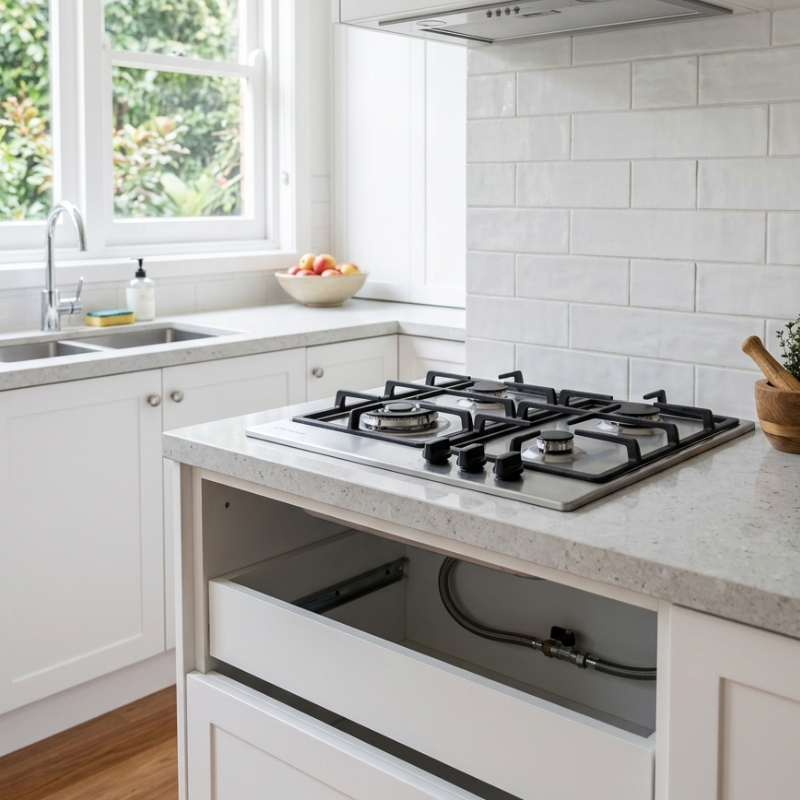
Thinking of Adding a Gas Cooktop or BBQ Line? Why Gas Work in NSW Must Be Done by a Licensed Gas Fitter
A new gas cooktop, a gas oven or an outdoor BBQ connection can be a great addition to a Sydney home. It is also the kind of job where it can be tempting to save a bit by doing it yourself or handing it to a general handyman.
In New South Wales, that is not a shortcut you are allowed to take. Gas work is regulated for good reason, and getting it wrong carries real risk. Here is why the law requires a licensed gas fitter, what a compliant installation actually involves, and what is at stake if the work is done outside the rules.
Why NSW law requires a licensed gas fitter for any gas work
In New South Wales, gas fitting has to be carried out by a licensed gas fitter. This is the law rather than a matter of preference, and it applies whether you are connecting a cooktop, an oven or an outdoor BBQ line. The NSW Government is clear that only licensed gasfitters can carry out gas work, and when the job is done a compliance certificate is issued for it, which is your record that the installation meets the required standard.
The reason is straightforward. Gas involves combustion, ventilation and pressure, and small mistakes can have serious consequences, so the work is restricted to people who are trained and licensed for it. That is exactly the work our licensed gas plumber is authorised to carry out.
What a compliant gas cooktop or oven installation actually involves
A compliant installation is about more than connecting an appliance and turning it on. A licensed gas fitter checks that the supply and fittings are right for the appliance, uses appropriate materials, confirms the correct clearances and ventilation, and tests the finished connection for leaks and pressure before signing it off. The compliance certificate follows once everything checks out.
Those checks are the difference between an appliance that runs safely and one that quietly becomes a hazard. You can read more about what is covered on our gas cooktop installation page.
Adding an outdoor BBQ or patio gas line the right way
A permanent BBQ or patio gas connection is popular for good reason, and it falls under the same rules as any indoor gas work. It needs the correct fittings, a properly rated line and a tested connection, all installed by a licensed gas fitter. A fixed outdoor connection is not a job to improvise, since it is exposed to the weather and often sits near where people gather.
Done properly, it is safe, tidy and reliable for years. For a permanent outdoor connection, our BBQ gas fitting service handles it from the supply point through to testing.
The real risks of DIY or unlicensed gas work
Unlicensed gas work is not a small gamble. A poor connection can leak, and a gas leak brings the risk of fire and, with faulty combustion, carbon monoxide. On top of the safety side, work done without a licence has no compliance certificate, which can cause problems with your insurance and when you come to sell. In short, the money saved up front is rarely worth what is on the line.
| Risk | What Can Go Wrong | Potential Consequence |
| Gas leaks | Poor connections or incorrect fittings can allow gas to escape. | Fire, explosion or serious property damage |
| Carbon monoxide | Faulty gas appliances or poor combustion can produce dangerous CO. | Carbon monoxide poisoning and serious health risks |
| No compliance certificate | Unlicensed work may not receive the required certification. | Compliance issues and difficulties proving the work was completed legally |
| Insurance problems | Unlicensed or non-compliant gas work may affect an insurance claim. | Potential claim disputes or reduced coverage |
| Resale complications | Buyers may question undocumented or non-compliant gas work. | Delays, additional inspections or costly rectification |
| Upfront cost savings | DIY or unlicensed work may appear cheaper initially. | Higher repair, replacement or rectification costs later |
| Legal consequences | Gas work generally requires a properly licensed professional. | Fines, enforcement action and liability for unsafe work |
It also helps to know the warning signs so you can react quickly if something is wrong. We have set out the early warning signs of a gas leak and the safe first steps to take if you ever smell gas at home.
Frequently asked questions
Can I install a gas cooktop myself in NSW?
No. In New South Wales, gas fitting must be carried out by a licensed gas fitter. Connecting a cooktop yourself is not permitted, and a compliant install is signed off with a compliance certificate.
Do I need a licensed gas fitter?
Yes. Any gas work, from a cooktop or oven to a BBQ line, has to be done by a licensed gas fitter in NSW. Not every plumber holds a gas licence, so it is worth checking before you book.
What is involved in a gas cooktop installation?
A licensed gas fitter confirms the supply and fittings suit the appliance, uses the right materials, checks clearances and ventilation, then tests the connection for leaks and pressure before issuing a compliance certificate.
How do I safely add a gas BBQ line?
A fixed BBQ or patio gas line should be installed by a licensed gas fitter using the correct fittings and a tested connection. It is not a DIY job, so the safe path is to have a licensed professional design, install and certify it.

