






DIY vs Professional Drain Cleaning: What’s Safe to Try in a Sydney Home?
A slow sink or shower drain rarely picks a convenient moment to misbehave. When blocked drains cause water to start pooling, most Sydney homeowners instinctively reach for a plunger or a bottle of drain cleaner before calling in the pros.Some DIY fixes can be quick, safe and surprisingly effective, while others may do more harm than good—especially in older terraces or tree-lined suburbs where pipes are already under stress. This guide walks you through the safest at-home methods, shows how they stack up against professional gear, and helps you recognise the line between an easy win and a job for blocked drain specialists.
1. Why Drains Block in Sydney Homes
Sydney’s mix of Federation-era clay pipes, leafy streets and booming apartment builds means blockages can arise from different culprits in different postcodes.
- Inner West terraces: ageing earthenware pipes and years of soap scum create narrow spots that catch hair and lint.
- North Shore family homes: jacaranda and fig roots sniff out moisture, then force their way into joins.
- High-rise apartments in Parramatta and the CBD: shared waste stacks trap anything from food scraps to “flushable” wipes.
- Coastal suburbs like Coogee or Manly: sand can wash into yard drains during storms, silting up underground lines.
Understanding the root cause matters because it influences whether DIY is realistic. Fat and soap in a new PVC kitchen pipe? Possibly. A root ball three metres underground? Probably not.
2. Quick Safety Check Before Any DIY Attempt
Before plunging into action, run through this short checklist:
- Turn off electrical power to appliances (e.g., garbage disposal) connected to the drain.
- Put on rubber gloves and eye protection—splash-back is unpredictable.
- Never mix chemical cleaners or pour boiling water into a chemical you’ve already added; toxic fumes and violent reactions are real risks.
- If you live in a unit block, confirm the blockage is inside your lot; clearing common property pipes is usually Strata’s responsibility.
- If water is backing up in multiple fixtures, stop and call a plumber—this typically signals a main sewer issue.
3. The Main DIY Drain-Cleaning Methods Explained
Sydney homeowners usually rely on four at-home approaches. Here’s how each works and what can go wrong.
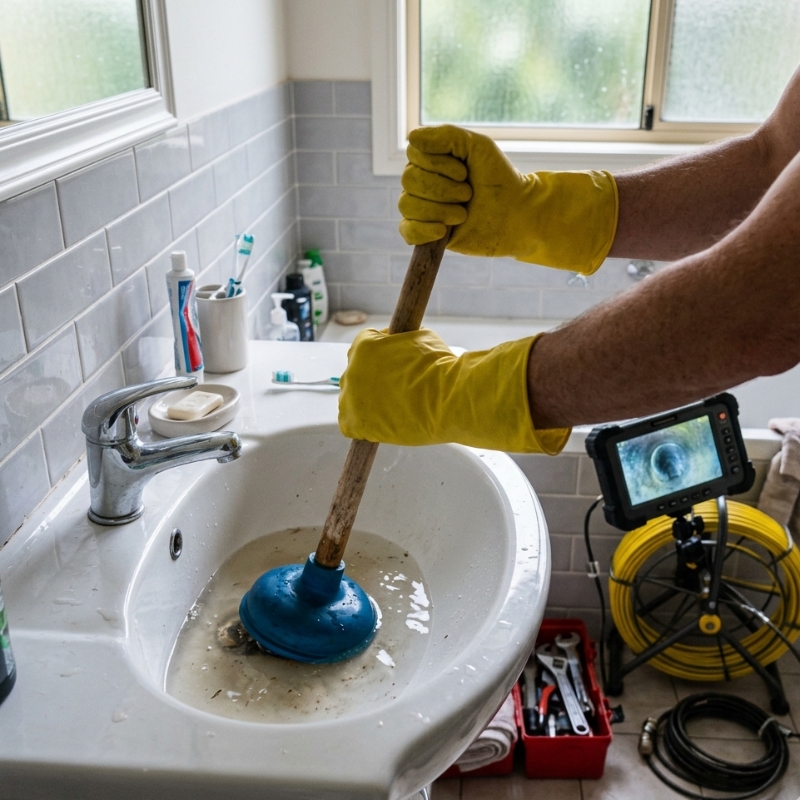
3.1 Plunger (Cup or Flange)
- How it works: creates pressure waves that dislodge soft blockages.
• Best for: recently clogged kitchen sinks or toilets with visible water.
• Watch out for: forcing air into loose pipe joins—older clay pipes may crack.
3.2 Baking Soda and Vinegar
- How it works: fizzing action loosens minor grease films.
- Best for: slow bathroom basins or shower drains with hair and soap.
- Watch out for: limited power—won’t shift lodged food lumps or enamel-hard fat.
3.3 Wet/Dry Vacuum
- How it works: reverses airflow to suck blockages backwards.
- Best for: floor wastes where you can create a seal.
- Watch out for: water damage if the canister isn’t rated for liquids.
3.4 Hardware-Store Chemical Cleaners
- How they work: caustic or acidic solutions dissolve organic matter.
• Best for: stubborn kitchen grease when used sparingly.
• Watch out for: pipe corrosion, toxic fumes, environmental harm and hefty fines if chemicals reach the stormwater system. Sydney Water warns that incorrect disposal can damage sewer infrastructure and waterways.
4. How Professional Drain Cleaning Differs
Licensed plumbers bring purpose-built gear that reaches deeper and diagnoses the underlying problem:
- CCTV drain cameras: pinpoint root ingress, collapsed pipes or foreign objects.
- Motorised drain snakes (augers): chew through compacted wads and small roots.
- High-pressure water jetters: blast away grease, scale and debris without chemicals.
- Pipe relining or spot repairs: address cracks so the blockage doesn’t return.
Thanks to on-board footage and pressure gauges, plumbers can show you exactly what’s going on—crucial for Strata reports or insurance claims.
Comparison Table: DIY vs Professional Options
Below is a quick side-by-side look at the common options, their effectiveness and the point where DIY should stop.
| Method | Typical Uses | Average Effectiveness | Risks to Watch |
When to Stop DIY
|
| Plunger | Fresh sink or toilet clog | High for soft plugs | Cracked seals on old pipes |
If the water level doesn’t drop after 5–6 plunges
|
| Baking soda + vinegar | Minor soap and hair build-up | Low to medium | Minimal, but slow action |
If gurgling returns within days
|
| Wet/dry vacuum | Floor wastes, shallow blockages | Medium | Spillage, electric shock if misused |
If suction fails to move the blockage after two attempts
|
| Chemical cleaners | Hardened grease films | Medium to high | Pipe corrosion, toxic splash, environmental penalties |
If multiple doses still leave water draining slowly
|
| Motorised snake | Deep or compacted clogs | High | Potential pipe damage if the tool misfeeds |
If you don’t have protective equipment or training
|
| Hydro-jetting | Root, grease and scale removal | Very high | Requires skill; water pressure can injure |
Not for DIY — professional only
|
A plunger or baking-soda fizz is safe to experiment with because they’re gentle. As soon as you consider chemicals, power tools or anything that requires dismantling traps behind walls, weigh up the cost of repairs if things go sideways.
5. Hidden Costs of “Cheap” DIY Chemical Cleaners
At $10–$20 a bottle, caustic cleaners look like a bargain. Long-term, though, the savings can evaporate:
- Repeated use can etch internal pipe walls, creating rough surfaces that actually attract future gunk.
- Aluminium and chrome fittings can discolour or pit.
- Splash-back can ruin benchtop sealants or bathroom tiles.
- Sydney Water can fine households for discharging prohibited substances into stormwater drains.
If you’re applying chemicals more than twice a year to the same drain, it’s a clue that the blockage source remains unsolved—often tree roots or a sagging pipe section.
6. When DIY Makes Sense (and When It Doesn’t)
Use DIY if:
• The clog is recent and localised—only one fixture is slow.
• Water still drains slowly rather than sitting motionless.
• You can hear water sloshing freely further down the line.
• You haven’t used harsh cleaners already (mixing products is dangerous).
Call a professional if:
• Multiple fixtures back up at once.
• There’s an overflow or water pooling outside near gully traps.
• You smell sewage odours indoors (possible vent or main sewer issue).
• Gurgling noises reappear within days of DIY treatment.
• Your home’s only toilet is involved—risking an all-night emergency isn’t worth it.
7. Common Mistakes Sydney Homeowners Should Avoid
- Over-plunging: violent plunging on fragile pipes can break them loose.
- Chemical cocktail: mixing brands (e.g., caustic then acidic) can generate chlorine gas.
- Using a coat hanger: scraping soft PVC may score the pipe wall, triggering future catches.
- Forgetting the P-trap: unscrewing and cleaning the trap beneath a sink is often easier and safer than chemical use.
- Ignoring the cause: clearing grease without adjusting cooking habits (like pouring fat down the sink) sets you up for repeat blockages.
8. Decision Framework: 3 Questions to Ask Before You Grab the Plunger
- Is the blockage above or below the floor?
• If water drains when you remove the P-trap, it was probably a local clog you can fix. - How old are your pipes?
• Earthenware (pre-1970s) cracks under harsh chemicals and pressure; safer to have a CCTV check first. - Does your home insurance cover damage from backups?
• Many policies exclude gradual damage. A quick professional fix may protect you from denied claims later.
9. What to Expect From a Professional Visit
A reputable plumber will:
- Inspect: use a CCTV camera to diagnose rather than guess.
- Explain: show footage or photos so you understand the cause.
- Clear: choose the least invasive method first—often hydro-jetting.
- Prevent: advise on habits, minor repairs or pipe relining if roots or cracks caused the issue.
- Document: provide images and a report, if needed, for Strata or insurance.
For a deeper dive into how hydro-jetting solves issues chemical cleaners can’t, see Can Drain Jetting Fix All Blocked Drains?—it breaks down pressures, safety controls and typical results in Sydney pipe systems.
10. FAQs
1. Will boiling water alone clear a greasy kitchen sink?
Boiling water can soften fresh grease lining the pipe, but it rarely shifts older, hardened fat. Use it as a maintenance step after scraping plates and running hot tap water, not as a cure-all for a fully blocked drain.
2. Are “flushable” wipes really safe for my plumbing?
Most wipes labelled flushable don’t break down quickly enough in Sydney sewers. They tangle with tree roots and fat, forming “fatbergs.” Bin them instead of flushing to prevent chronic blockages.
3. How often can I use baking soda and vinegar without harming pipes?
The mixture is gentle enough for monthly preventive use. It won’t corrode pipes, though its cleaning power is limited. Think of it as a maintenance rinse rather than a heavy-duty cleaner.
4. Does homeowner’s insurance cover damage from DIY chemical cleaners?
Policies differ, but many exclude damage caused by gradual corrosion or negligence. If chemicals eat through a pipe and cause flooding, you may face out-of-pocket repairs.
5. Can hydro-jetting damage my pipes?
When performed by a trained plumber, hydro-jetting is safe for PVC, copper and even older earthenware lines. Professionals match pressure to pipe material and inspect with a camera first to avoid exacerbating cracks.
Final Thoughts
A plunger, natural fizz or quick trap clean can save the day for minor, localised clogs. Once chemicals, repeated blockages or multiple fixtures enter the picture, the safest—and often cheapest in the long run—solution is a professional assessment. If that slow gurgle keeps coming back, expert equipment can clear the buildup, spot hidden cracks and keep your drains flowing freely without risking pipe or environmental damage.

